The Multimodal Blindspot in Content Creation
Text generation alone can't carry a modern campaign. If you're looking for the best AI software for engaging marketing content, you need a unified approach that treats video, audio, and visual tools as core components, rather than afterthoughts.
Many marketing teams still treat AI like a glorified typewriter. They spend hours prompting for the perfect blog post but completely ignore how that text translates to modern visual platforms. This creates a massive disconnect between written strategy and actual execution.
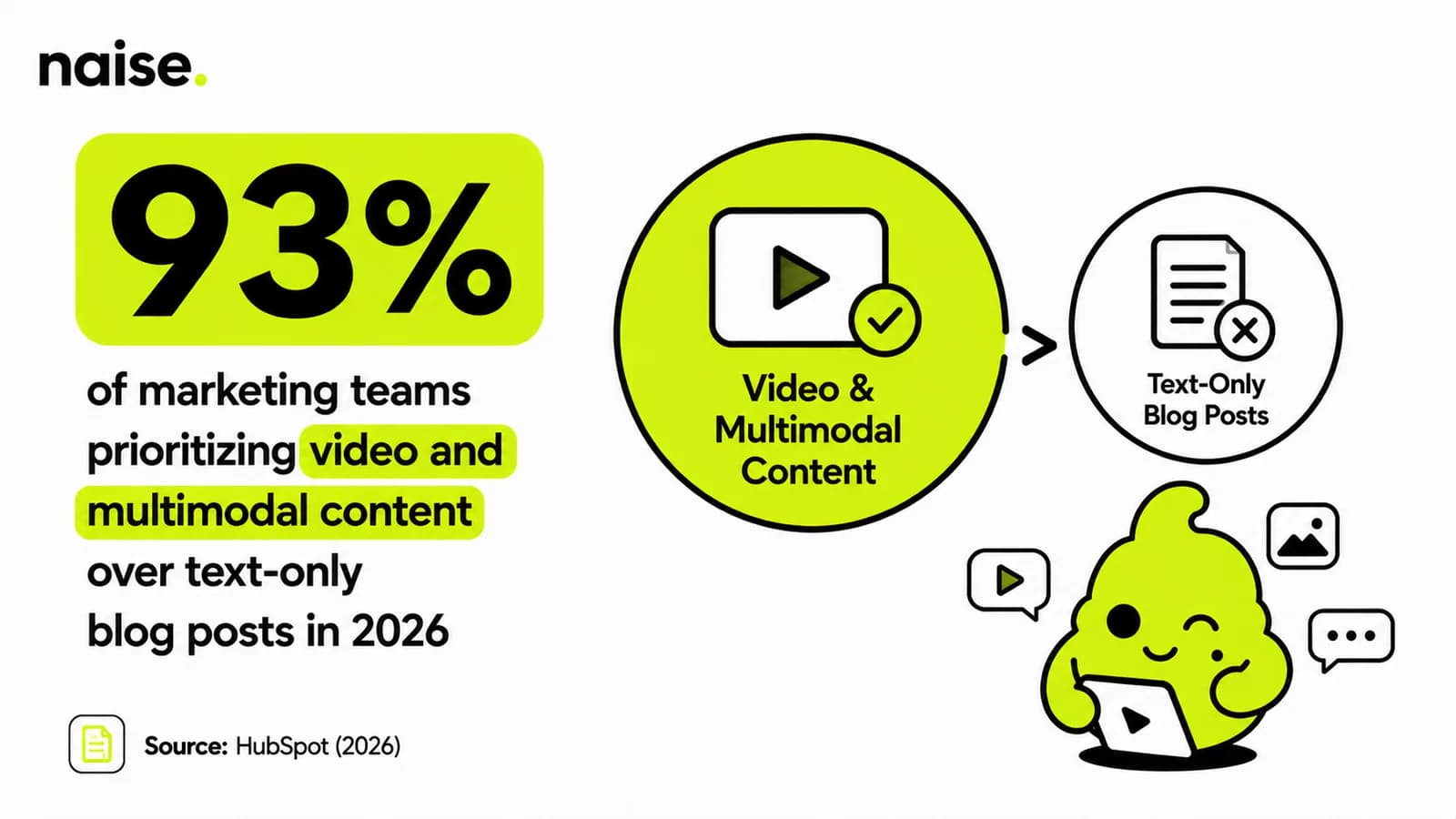
Consumers do not read walls of text on social media anymore. If your software stack cannot speak directly to your visual assets, your engagement will flatline. Modern marketing requires systems that account for CapCut edits, Canva graphics, and Figma design files.
Treating text as an isolated deliverable is a recipe for low conversion rates. High-performing teams build workflows where written copy naturally informs the visual storyboard.
Breaking the Workflow Fragmentation
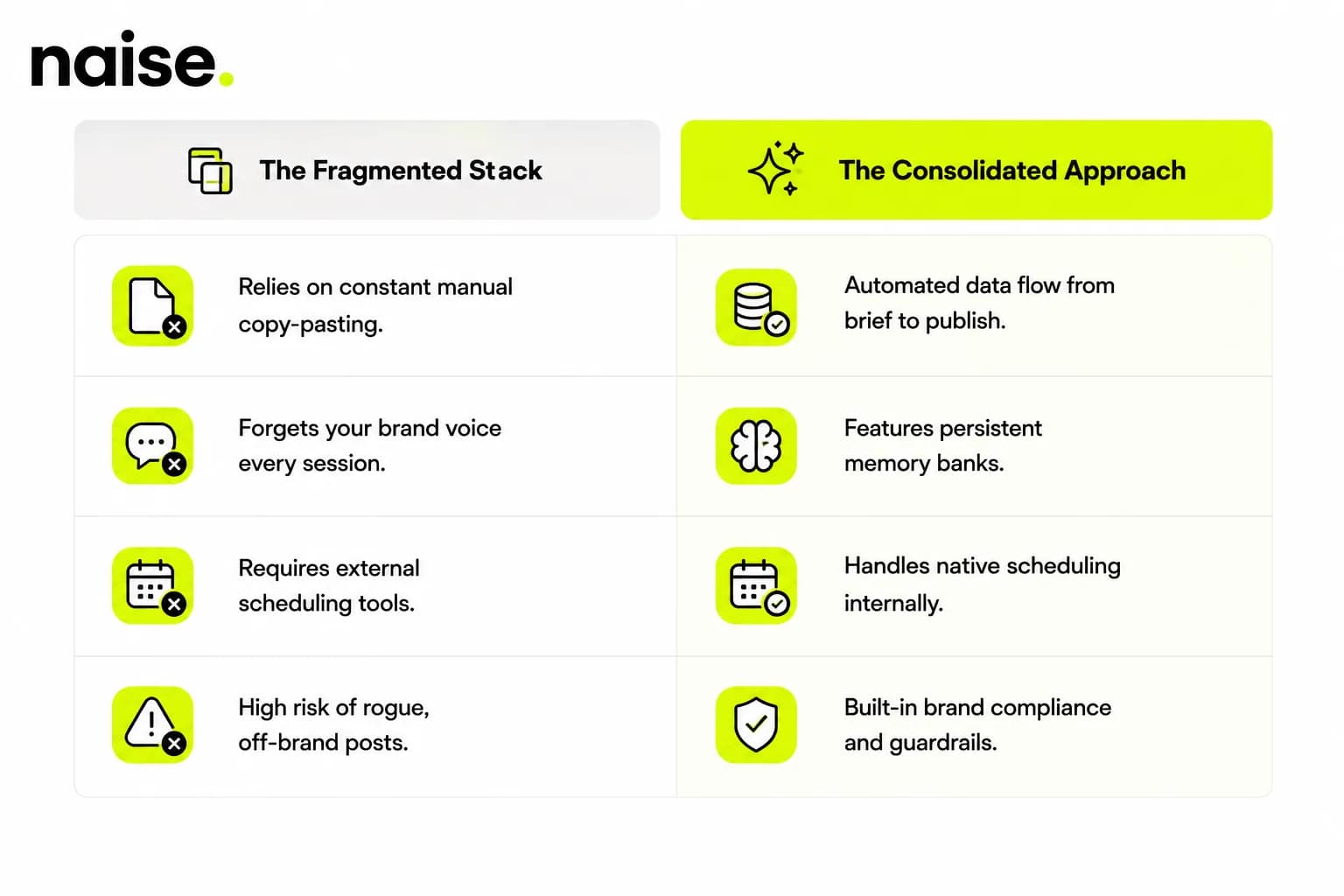
Isolated tools kill productivity and drain your budget. The ideal tech stack connects ideation, approval, and scheduling into a single, cohesive pipeline.
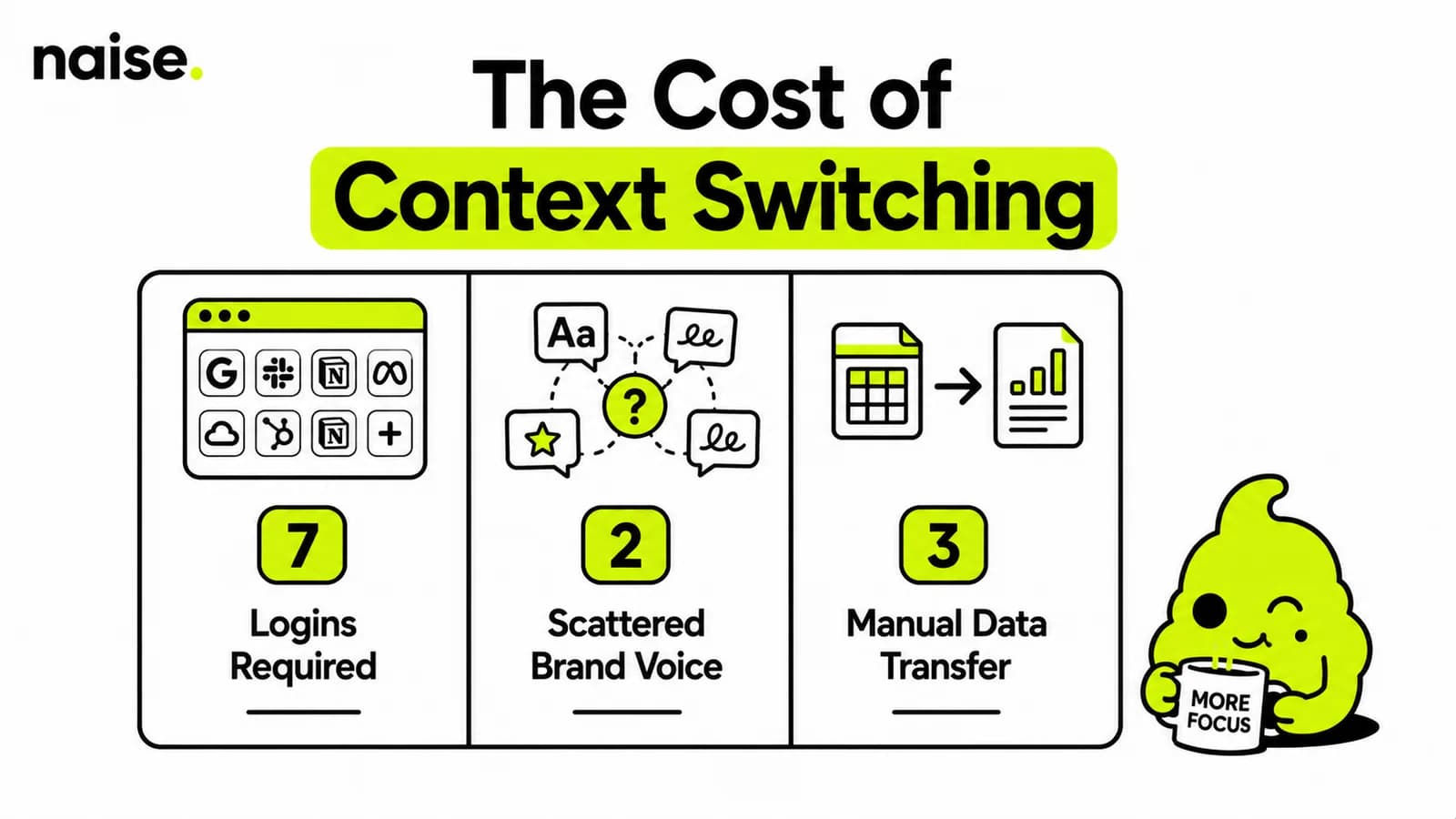
Building a campaign across seven different browser tabs is not scalable. You draft in one app, check grammar in another, and move to HubSpot or Hootsuite for scheduling. This fragmented approach destroys momentum and introduces constant human error.
Marketing software should act as a centralized command center. When your tools do not communicate, your team wastes critical hours just transferring data. This administrative bloat is exactly why lean marketing teams burn out so quickly.
The goal is to consolidate your operations. An effective system reduces tab-switching and keeps your entire Content Supply Chain visible in one place.
The Speed vs. Engagement Paradox
Fast drafting guarantees volume, but it absolutely does not guarantee revenue. High engagement requires human-in-the-loop editing and the injection of first-party brand data.
Pumping out fifty automated posts a day is useless if your audience scrolls right past them. A lot of modern software sells the dream of instant generation. However, they fail to mention that raw, unedited AI output usually sounds robotic and lacks empathy.
Real engagement comes from unique perspectives and internal company data. If you feed generic prompts into a system, you will get generic results. Your software must allow you to inject your specific Brand Guidelines and past performance metrics into the generation process.
Speed is only valuable if the output actually resonates with your target audience. You need a system that learns your Tone of Voice instead of resetting every time you open a new chat.
Moving Past Outdated Software Distinctions
The old debate between general-purpose chatbots and specialized writing tools is obsolete. Modern software blends foundational reasoning with strict brand governance.
A few years ago, marketers debated whether to use ChatGPT for brainstorming or Jasper for the final draft. Those boundaries no longer exist. Foundational models are now smart enough to do both, provided they have the right guardrails.
The true differentiator today is memory and context retention. Software that forgets who you are after a single session is a waste of time. You need tools that store your Brand Identity permanently.
Stop categorizing tools by what they output. Start evaluating them by how well they remember your core business objectives.
Scale and Governance for Modern Teams
Solo creators prioritize frictionless interfaces, but scaling teams demand data security, approval workflows, and role-based permissions.
A solo founder can afford to fly by the seat of their pants using a basic free tool. Mid-sized agencies and enterprise teams cannot take that risk. When multiple people touch a campaign, you need strict Brand Compliance checks.
Enterprise software must separate the ideation phase from the execution phase. Managers need the ability to review content before a junior team member hits publish. If your software lacks permission controls, you are risking a public relations disaster.
How to Generate Engaging Content with Naise AI
Stop piecing together broken tools and let an autonomous marketing operator handle the heavy lifting. Naise AI centralizes your context, prompts, and publishing into one unified interface.
Finding the best AI software for engaging marketing content ends when you discover how an autonomous operator actually works. You start by uploading your brand guidelines and past data directly into Projects. This creates a persistent memory bank, ensuring the AI never forgets your specific tone of voice.
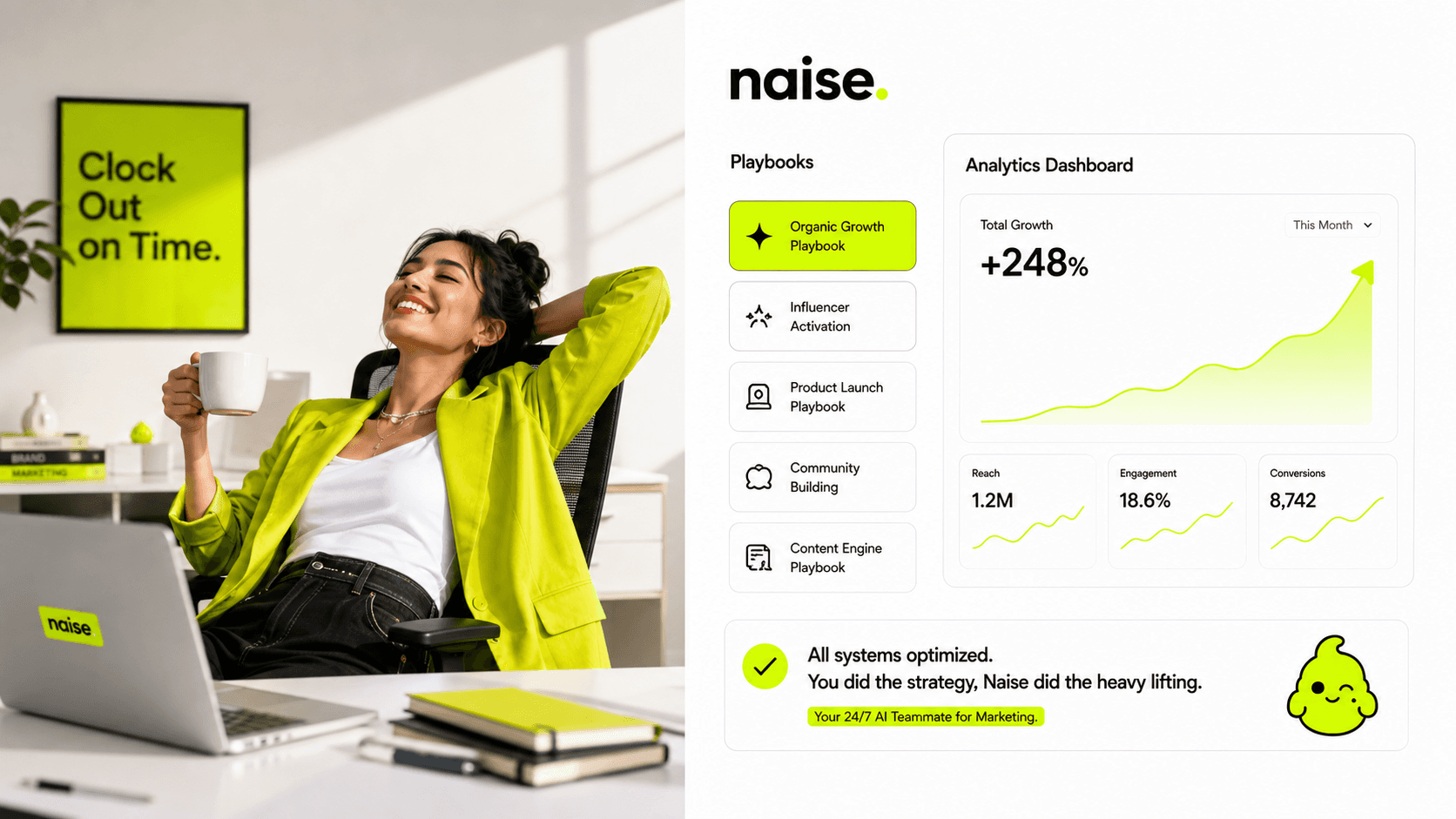
Next, you open Naise Chat and select from our library of Playbooks. These are expert, pre-configured prompt templates that completely eliminate prompt fatigue. You just pick your strategy, and the system knows exactly what to do.
Finally, you hand the task over to the SMM Agent. This autonomous teammate drafts the posts, checks them against your brand rules, and schedules them directly to your connected social channels. You get all the speed of automation with the strict quality control of a human manager.

Scaling your content operation does not require hiring five more people or buying a dozen different software subscriptions. You just need the best AI software for engaging marketing content that actually remembers who you are. Stop doing the manual grunt work and let a dedicated operator handle the execution.
Frequently Asked Questions (FAQs)
What is the biggest mistake marketers make with AI content?
The biggest mistake is ignoring brand context and relying on zero-shot prompting. When you do not provide specific company data, the output becomes generic and robotic. Engaging content requires systems with persistent memory to maintain a consistent voice.
Why do I need an AI agent instead of a standard text generator?
Standard text generators only solve the blank page problem. An AI agent actually executes the work by generating the content, checking it for brand compliance, and scheduling it to your platforms. Agents eliminate the administrative busywork that comes after the writing is done.
How does persistent memory improve content quality?
Persistent memory allows the software to reference your specific tone, banned words, and target audience data automatically. You upload your brand documents once, and the system applies those rules to every future campaign. This completely eliminates the need to copy and paste your instructions every day.