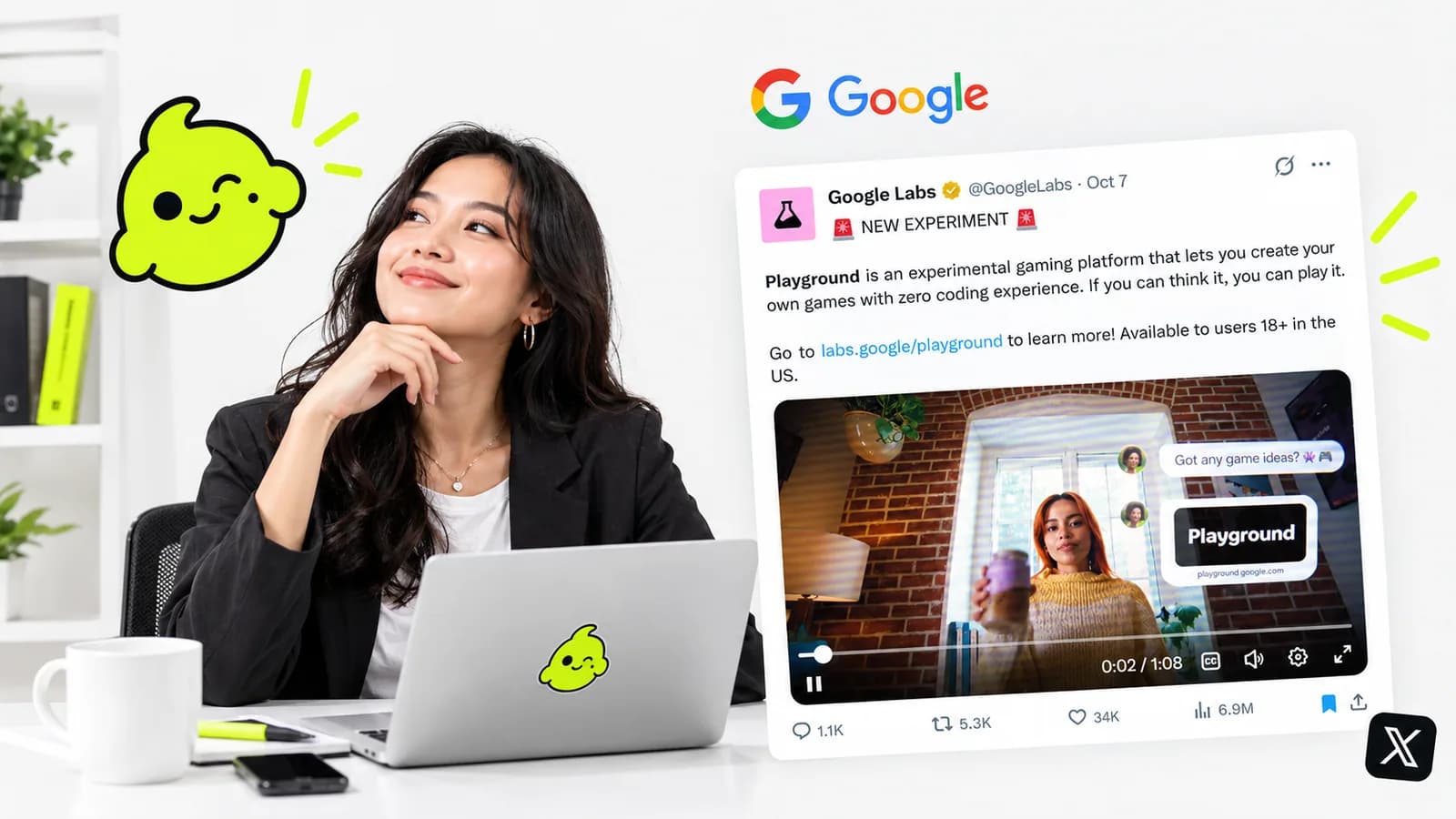
Google just released Playground, a highly anticipated AI platform that turns simple text prompts into fully playable, shareable video games right in your browser. This experimental tool leverages Gemini and Lyria to instantly generate rules, physics, and environments without a single line of code. While this signals a massive leap for the Creator Economy, it also highlights a growing issue for modern teams: Prompt Fatigue. As AI handling complex executions becomes the norm, marketers must stop manually typing prompts and start relying on autonomous systems to scale their output.
What Exactly is Google Playground AI?
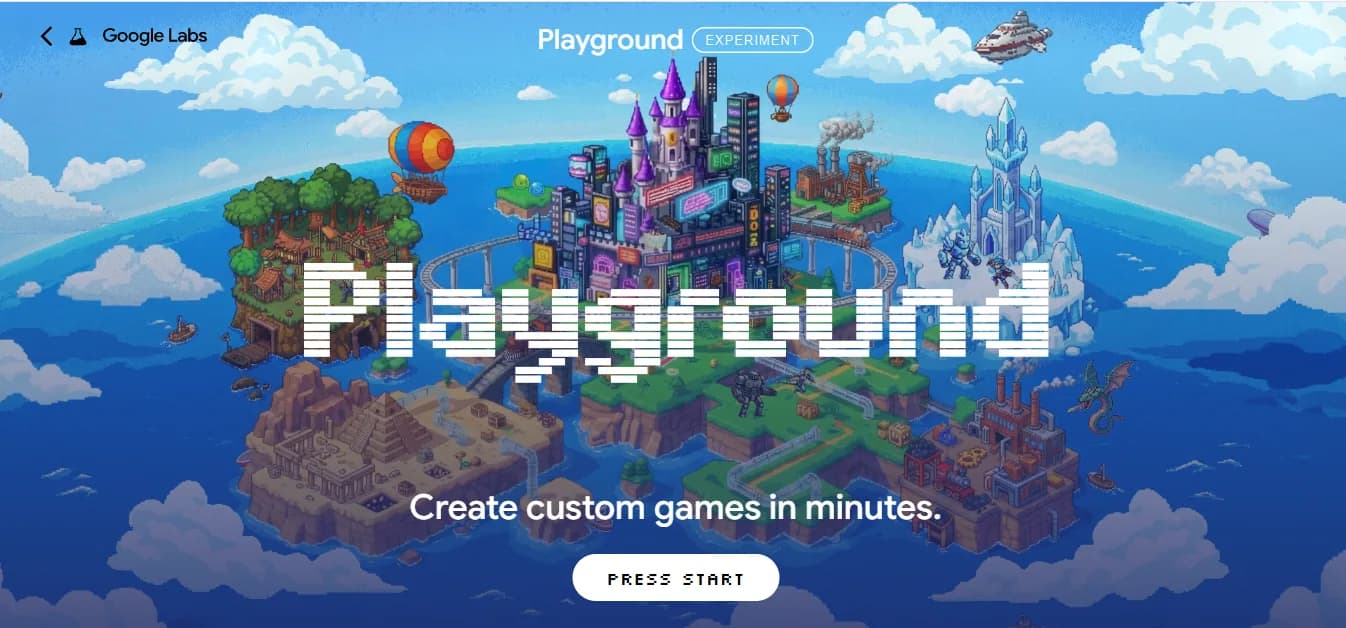
Google Playground AI is an experimental gaming platform that allows users to create fully functional 2D and 3D browser games simply by describing them via text prompts.
The tech world is currently buzzing about a quiet but massive drop from Google Labs. Based on recent search trends, interest for this specific platform has spiked over 90% across the board in just days. The premise is almost unfairly simple. You type a concept into a chatbox, and the AI builds a fully playable game around your idea.
As highlighted in recent viral leaks, the interface literally just asks, "Got any game ideas?" You can change the main characters, tweak the gravity, or alter the core rules just by talking to the interface. There is zero coding required, and the barrier to entry for game development has effectively dropped to zero.
Currently, this experiment is rolling out to users aged 18 and older in the US. The platform supports multiple genres like runners, shooters, and breakout-style mechanics. You can even generate multiplayer experiences with built-in leaderboards directly inside your web browser.
Under the Hood: Gemini, Lyria, and Nano Banana
Google Playground runs on a highly advanced AI stack featuring Gemini for core logic, Lyria for audio generation, and specialized models to render instant game physics.
The engine powering this entire experience is nothing short of incredible. Based on early community breakdowns, the platform relies heavily on the Gemini framework to understand complex instructions. When you ask for "a game where a cat jumps over falling pianos," the AI mathematically maps out the physics, collision detection, and win states instantly.
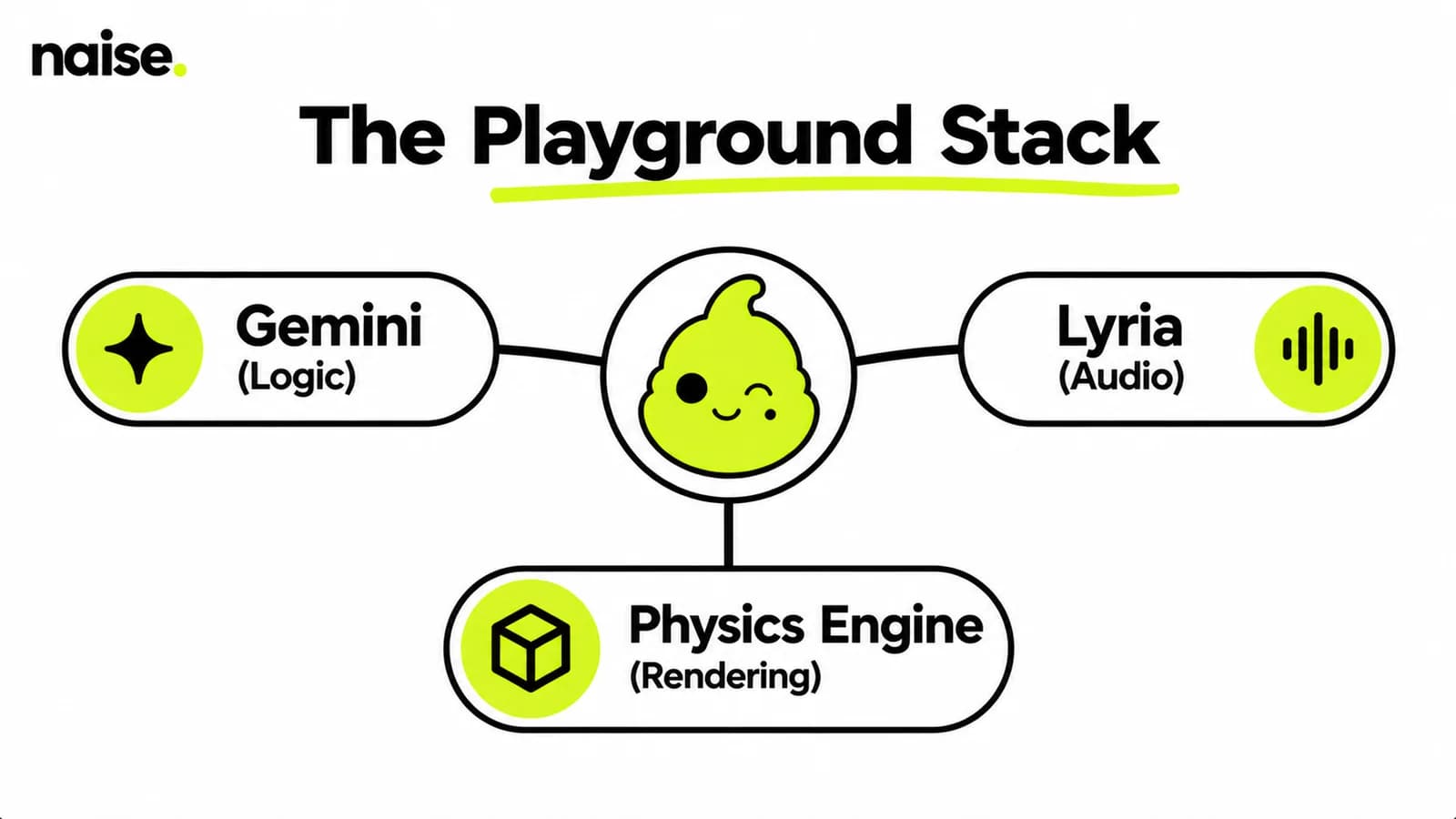
Audio is just as crucial for user retention. The integration of Lyria, Google's premier music generation model, ensures that your custom game does not feel like a sterile sandbox. It generates responsive soundtracks and sound effects that match the specific vibe of your text prompt.
There are also rumors and community mentions of a model called Nano Banana working in the background. While the technical specifics of that specific layer remain under wraps, the results are undeniable. Google is actively working on a Unity Spark integration to push this into advanced 3D territory, moving far beyond basic browser arcade mechanics.
From Prompts to Profits: The Web3 Collision
The Playground platform is already intersecting with the crypto space, allowing creators to turn their AI-generated games into tradeable assets via platforms like pump.fun.
The moment a new creation tool drops, the internet finds a way to monetize it. Independent developers have already built launchpads on top of this ecosystem. Platforms like Playgroundpad allow you to take the game you just prompted and attach it to a cryptocurrency coin.
This creates a fascinating new flywheel for the Creator Economy. The game's main character becomes the coin's mascot, and the playable link lives directly inside the asset. When people hold or trade the coin, the original creator earns a percentage of the transaction fees.
By November 2024, pump.fun’s daily active users had surpassed 200,000—up from roughly 30,000–50,000 in August—while its daily trading volume consistently exceeded $200 million, with peaks above $300 million.
This completely rewrites the rules of engagement for digital assets. A text prompt is now the absolute cheapest way to manufacture an interactive product. Pairing that instant product with a crypto launchpad gives it an immediate audience and an automated budget.
Prompting is the New Execution
As AI evolves to build entire games from a single sentence, manual prompt engineering is quickly becoming an outdated, exhausting bottleneck for daily workflows.
The launch of this platform proves a fundamental truth about where technology is heading. We are moving away from manual assembly and leaning entirely into intent-based execution. You simply state what you want, and the machine builds the architecture.
However, this highlights a massive friction point in the corporate world, specifically in marketing. We call it Prompt Fatigue. If an AI can build a multiplayer 3D game from one sentence, why are marketers still spending 45 minutes writing massive, ten-paragraph prompts just to get a decent social media caption?
Staring at a blinking cursor and trying to engineer the perfect context for ChatGPT is draining. You have to constantly remind generic bots of your brand voice, your target audience, and your formatting rules every single day. The technology is capable of so much more, but the manual interface is holding teams back.
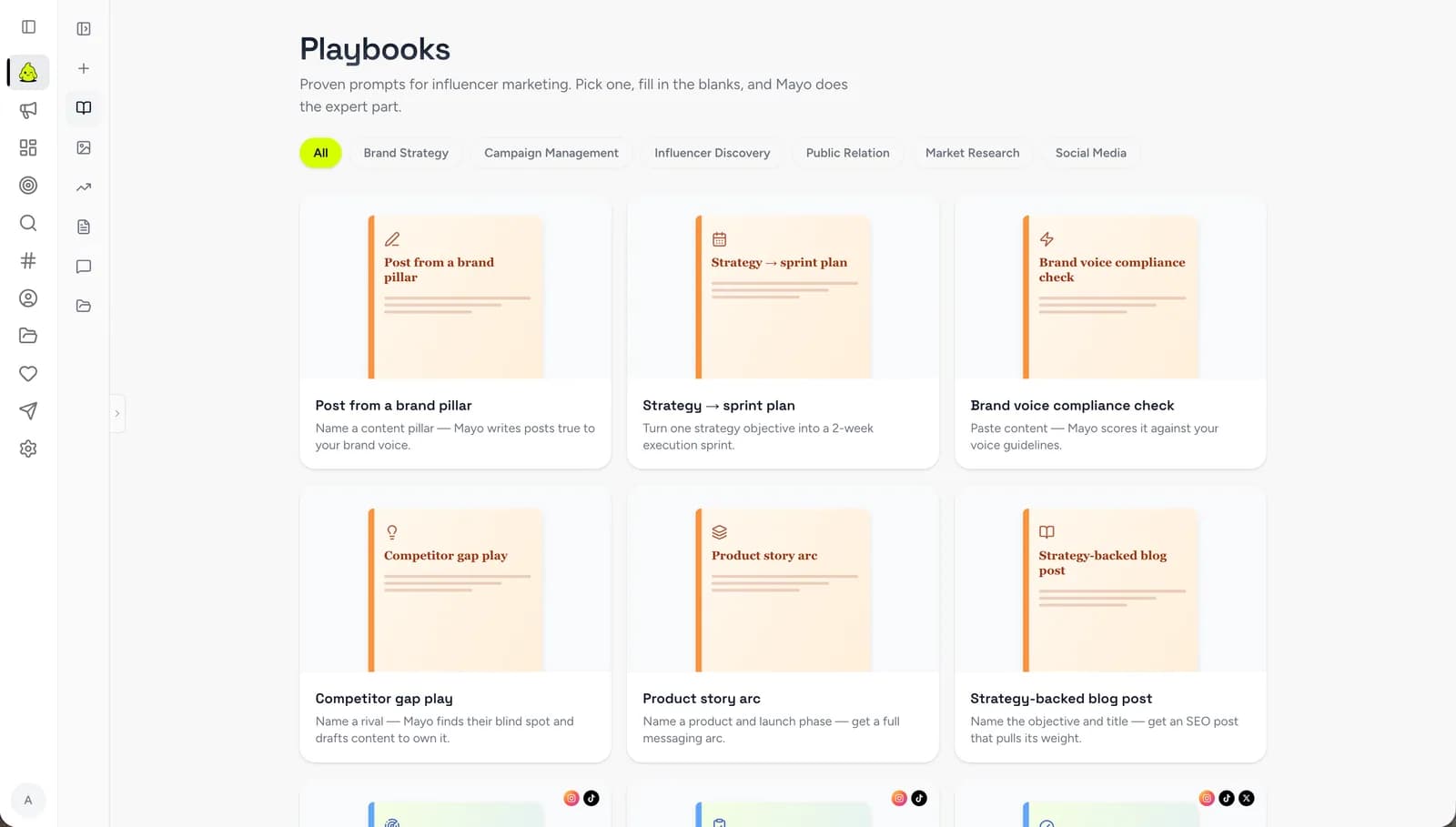
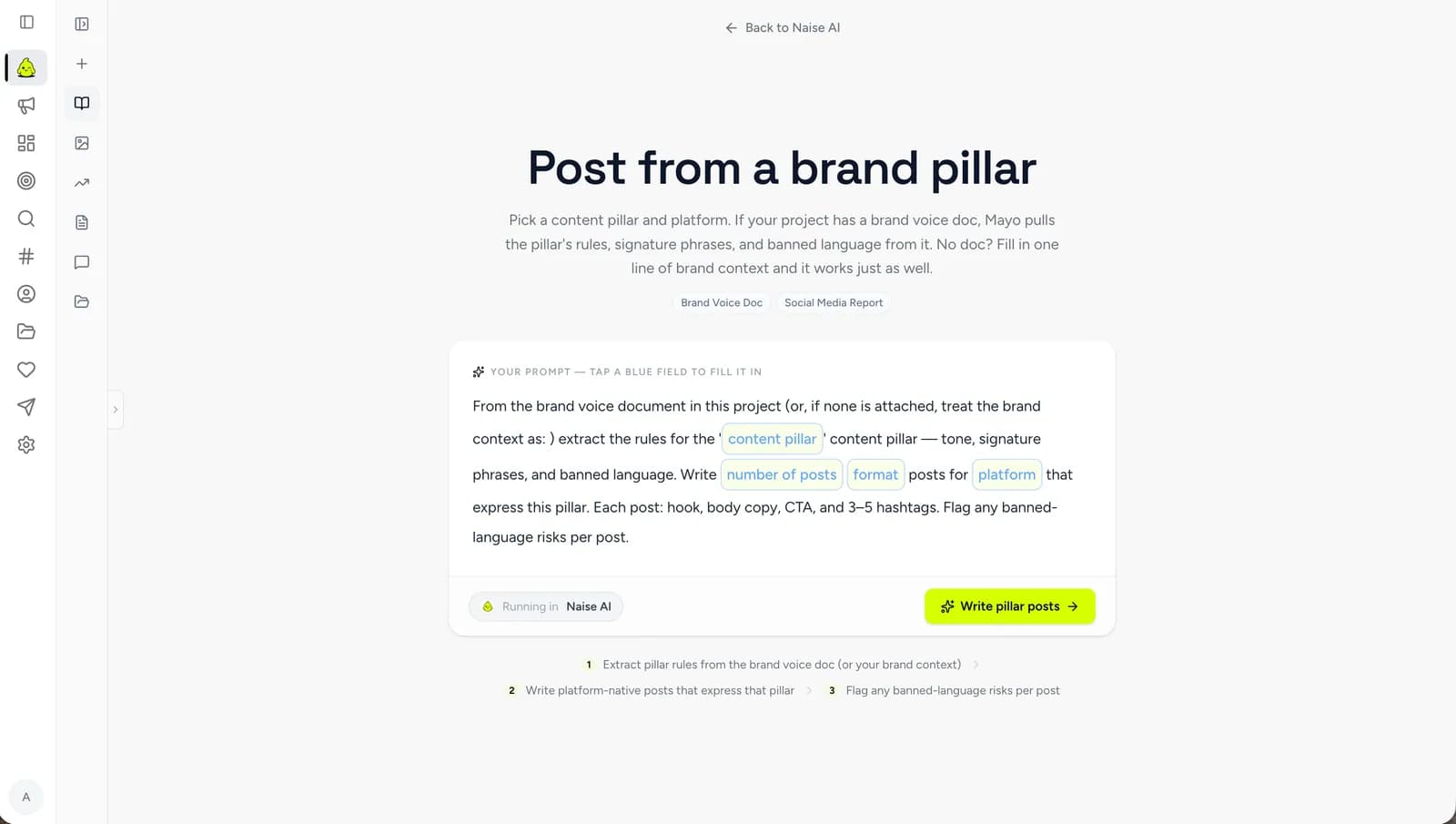
Stop Manually Prompting Your Marketing Campaigns
Naise AI eliminates manual prompting by using pre-configured Playbooks and persistent memory to execute marketing campaigns autonomously.
You do not need to be a prompt engineer to get agency-level results. Just like Google Playground handles the physics and coding behind the scenes, Naise AI handles the heavy lifting of your marketing strategy. We built this platform for teams who want to clock out on time, not spend hours arguing with a chatbot.
Marketers waste around 5 hours per week switching between tools and refocusing after context switches.
Instead of starting from scratch every morning, you upload your brand guidelines into our Projects feature once. This gives the AI persistent memory. It learns your exact tone of voice, your negative keywords, and your visual aesthetics, locking them in forever.
When you need to execute a campaign, you simply select one of our expert Playbooks. These are highly optimized, pre-built strategies that require zero manual prompting. You just choose the goal, and our specialized Agents take over, drafting the content, generating the visuals, and perfectly aligning everything with your brand identity. Let the AI overthink the prompt architecture so you can focus purely on growth.
FAQs
Is Google Playground AI free to use?
Yes, Google Playground is completely free to use during its experimental phase. It operates on a weekly token budget to manage server load, allowing users to generate and iterate on multiple games without upfront costs.
Who can access Google Playground right now?
Currently, the platform is rolling out as an experimental feature strictly to users aged 18 and older located within the United States. Google plans to expand access as the platform stabilizes and scales.
Do I need coding experience to use Playground?
No coding experience is required. The platform operates entirely on text-based prompts, meaning you simply type out the rules, characters, and environment you want, and the AI builds the code automatically in the background.
Can I monetize games made with Google AI?
Yes, third-party developers have already created workarounds for monetization. Platforms like Playgroundpad allow users to link their AI-generated games to crypto tokens on networks like pump.fun, allowing creators to earn fees from trading volume.