Learning how to perform a comprehensive Instagram audit shouldn't take a whole weekend of manual data entry. This guide breaks down the essential steps to evaluate your profile's health, from checking your core engagement metrics to analyzing your competitors, so you can stop guessing and start building a data-backed growth strategy.
How to Run an Instagram Audit: Complete Guide
Running an Instagram profile may seem easy at first. After all, it’s just about adding posts and Stories, right? If you’ve worked in the industry for a while, you know that’s far from the truth.
Running an Instagram profile is a full-time job. Between hunting down trending audio, managing influencer collaborations, and trying to decipher the latest algorithm changes, it is incredibly easy to lose sight of the bigger picture. From strategy and content creation to performance analysis, there’s a lot you need to take care of.
That is exactly why you need to know how to perform a comprehensive Instagram audit. Think of it as a routine health check for your brand's digital storefront. It is a systematic review of your profile's performance, visual identity, and overall strategy to ensure everything is aligned with your current business goals. Are your Reels actually driving website traffic? Is your bio effectively explaining what you do to new visitors? A proper audit answers these questions, moving you away from vanity metrics and toward actionable, data-driven decisions.
What is an Instagram audit and why should you run one?
An Instagram audit is the process of assessing your overall Instagram performance. Regular audits are essential for ongoing optimization, especially for marketing managers looking to improve their social media strategy without increasing headcount. Conducting one will help you answer crucial questions: Is my Instagram marketing strategy effective? Are my goals being met? How does my profile compare to the competition?
Keep in mind that an Instagram account audit isn’t a one-time event. It should be part of your regular business routine. Conduct audits regularly, once or twice a year, to ensure your strategy stays effective and adapts to platform changes.
1. Analyze Your Overall Profile Appearance
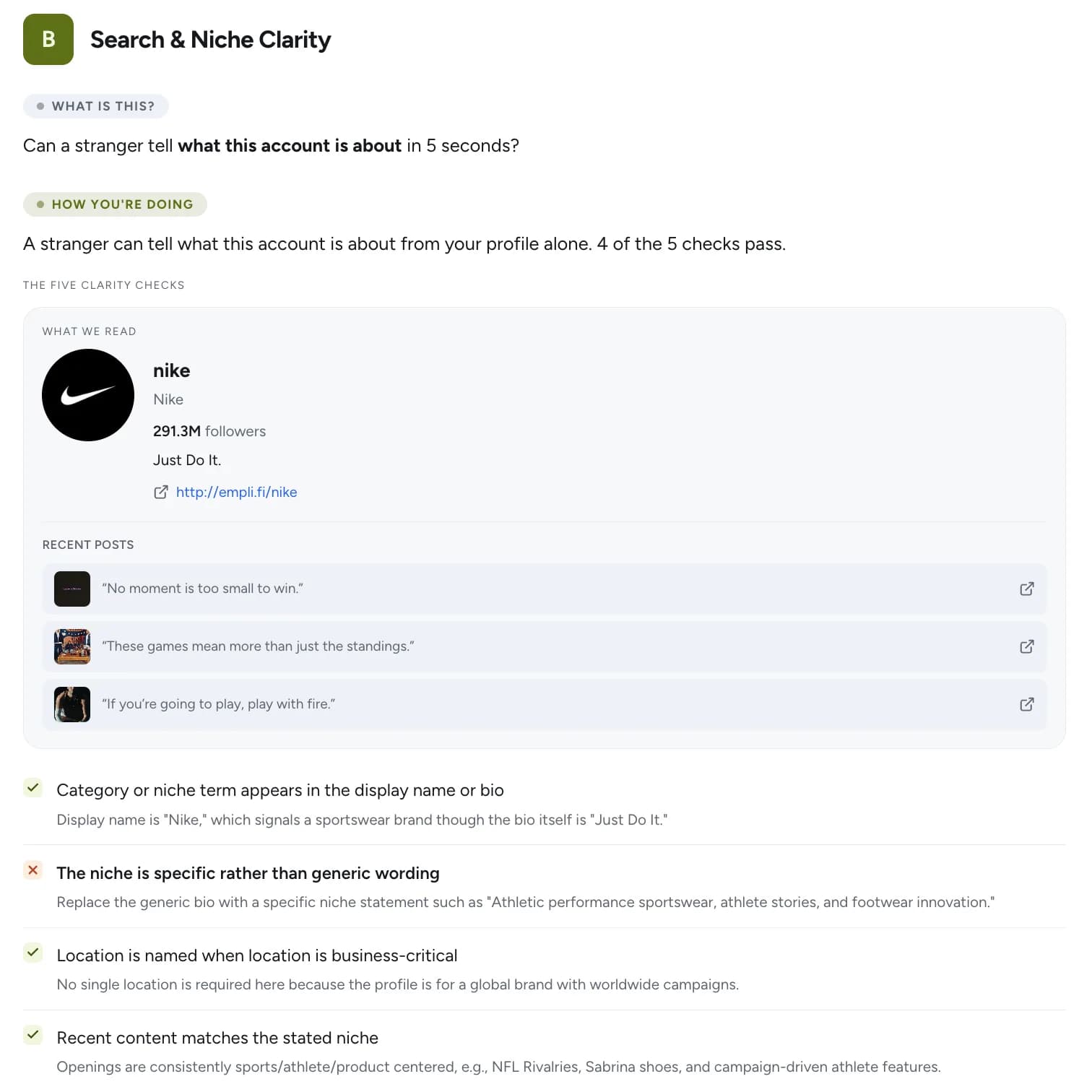
To analyze your profile appearance, view your page as a first-time visitor. Ensure your profile picture is clear, your bio is concise and keyword-rich, and your link-in-bio is fully functional and trackable.
Imagine you’ve never seen your profile before. Take your phone, open Instagram, and look at your profile. What was your first impression? Take your time and be honest with yourself about what you think about your profile. Does it look appealing? Would you hit the follow button as a new visitor?
Don’t neglect two elements – branding and tone of voice. You should easily notice if the communication on your profile is coherent both visually and voice-wise. Start with the basics. Is your profile picture high-resolution and easily recognizable? Next, ruthlessly edit your bio. It shouldn't just be a list of cute emojis. Your bio needs to clearly state who you are, what value you provide, and include semantic SEO keywords relevant to your industry.
Finally, check your most critical conversion point: the link in your bio. Is the link clear, clickable, and working? Make sure it aligns with your current campaigns and overall branding to maximize engagement and drive traffic. Always use UTM parameters so you can attribute actual website traffic and sales back to your Instagram efforts.
2. Check Your Key Growth Metrics and ROI
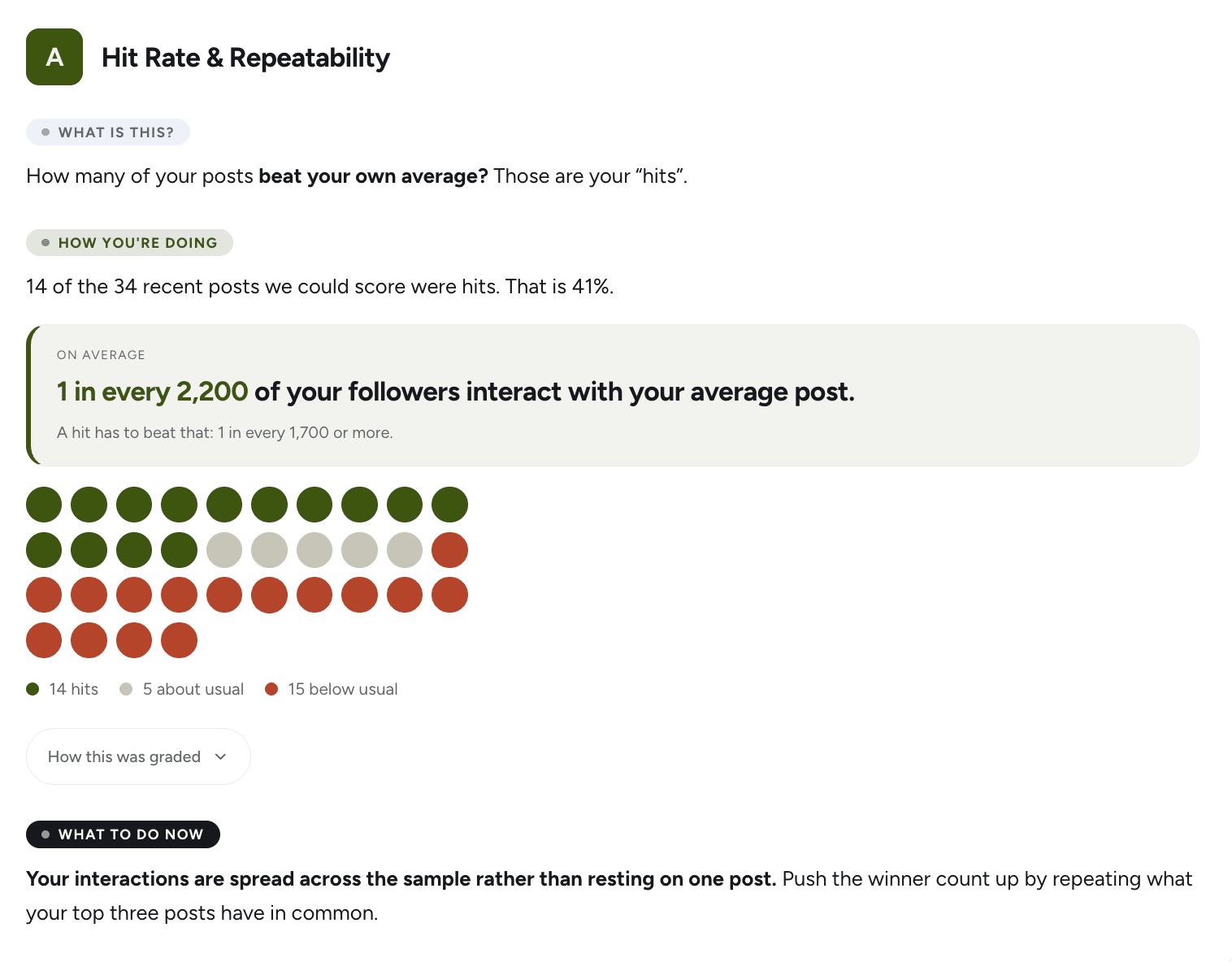
Move beyond follower counts and track metrics that indicate genuine growth, such as average reach, engagement rate, and the percentage of followers converting to website traffic.
Before you dive into the details regarding your performance, start by checking some basic but important stats. It is easy to get caught up in the pursuit of gaining new followers. However, a massive audience means very little if they aren't interacting with your brand or moving down your sales funnel.
Look at your account's average reach and impression levels over the last 30 to 90 days. Are these numbers trending upwards, or have they plateaued? To be able to assess if your account is performing well, you’ll need to take a look at your KPIs and goals. Gaining 1,000 new followers may sound good, but what if your goal was 5,000?
More importantly, tie these metrics back to your business goals. If your objective was to increase sign-ups for a new software feature, tracking your follower growth won't tell you if the campaign was successful. You must analyze the correlation between your Instagram activity and your actual conversions.
3. Dive Deeper into User Engagement Quality
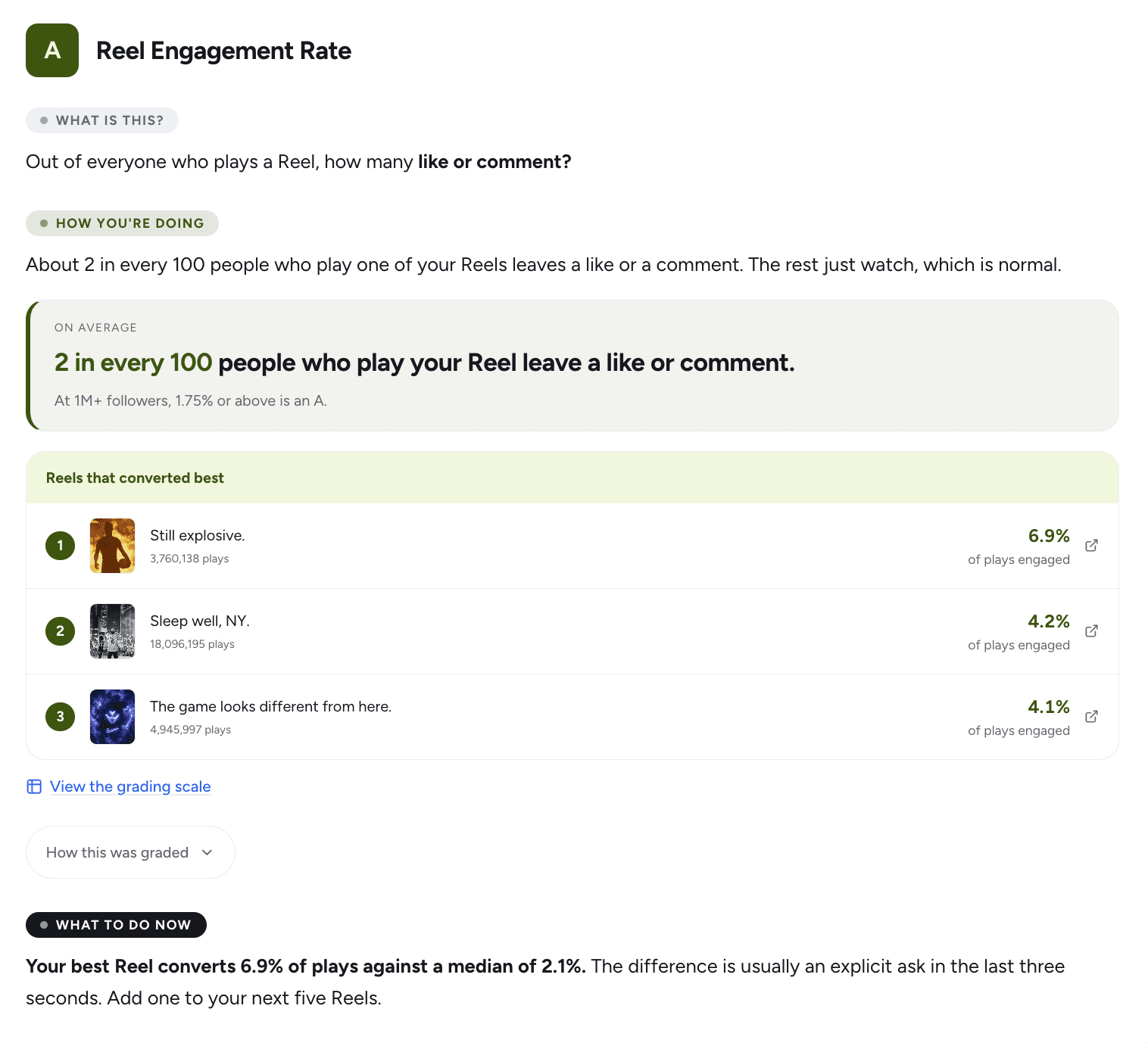
Calculate your true engagement rate by measuring meaningful interactions (saves, shares, and comments) against your total reach, rather than just tallying up superficial likes.
Engagement is currently what Instagram creators should be fighting for. And we’re not talking about likes, which are easy to manipulate, but about more valuable user actions. A simple "like" is a passive action, whereas a save or a share indicates that your content resonated deeply enough for the user to want to return to it.
When conducting an Instagram profile audit, analyze your engagement rate based on reach, not just your total follower count. The modern formula is: (Total Interactions / Total Reach) x 100. Identify your top-performing content based on these high-value interactions. What patterns emerge?
Analyzing user engagement will enable you to understand your audience’s preferences. Monitoring and analyzing comments is crucial, as it provides qualitative insights into what content resonates most. If your followers aren't commenting or sharing, they probably didn't find the content helpful or interesting enough.
4. Review the Content You Share (And What You Should Stop Making)
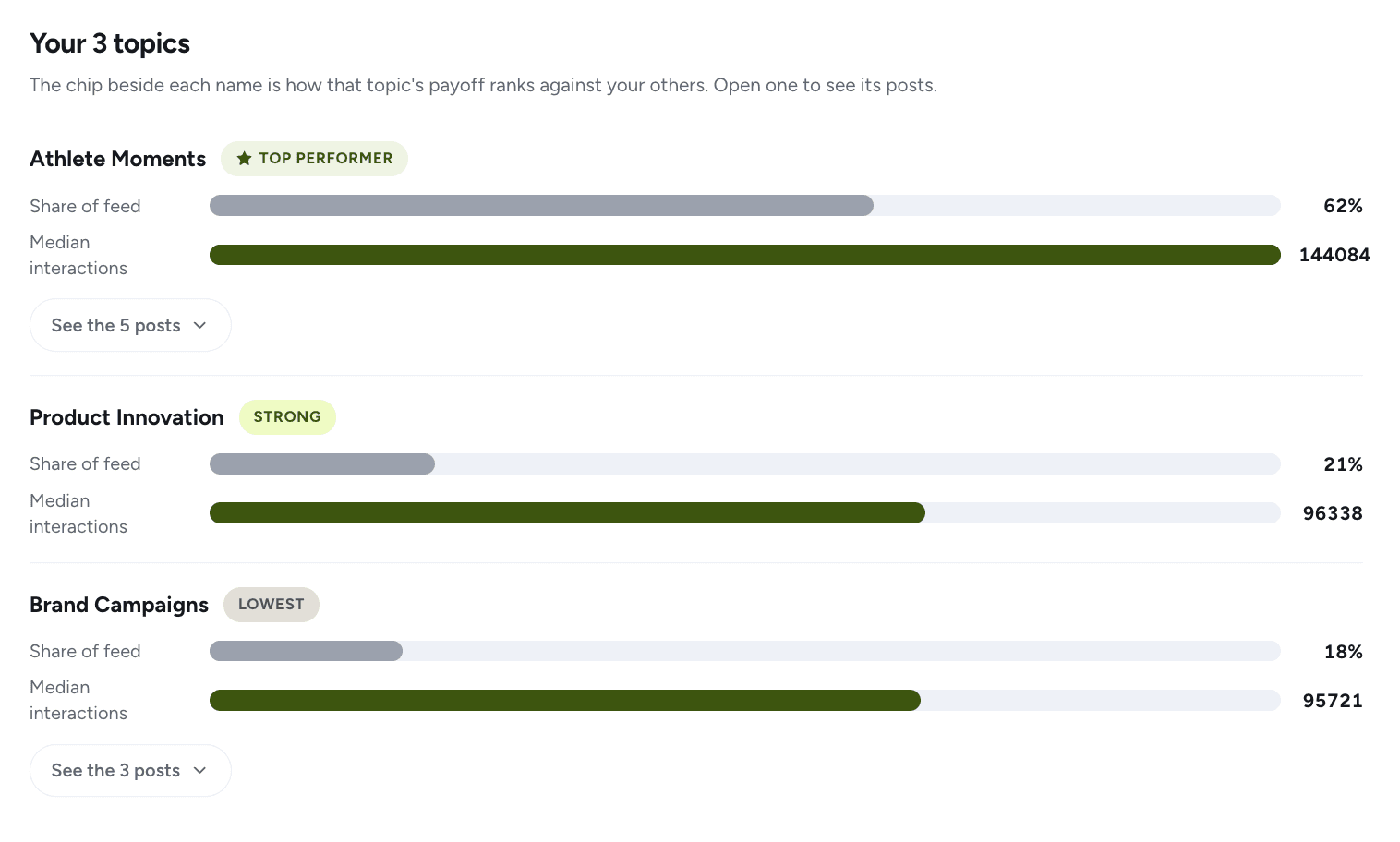
Audit your content pillars to identify which topics drive the highest ROI and which are wasting your production budget, allowing you to reallocate resources efficiently.
As we’ve just discussed, your content is your greatest asset. Once you know what your audience liked most on your profile, you should juxtapose these insights with your expertise. Are you spending 60% of your time creating high-production videos that only generate 10% of your total engagement?
Map out your content pillars and analyze the effort-versus-reward ratio for each. You might discover that the simple, text-heavy graphics you create in five minutes consistently outperform the complex edits that take your team hours. Another thing to consider is whether the content you publish is in line with your branding (colors, characteristic graphic elements, etc.).
This is about resource allocation. By identifying the content pillars that generate a disproportionate amount of interaction, you can stop wasting time on low-performing formats and reallocate that budget toward what actually moves the needle. Ensure all content supports your overall marketing strategy and use relevant Instagram SEO techniques, like on-screen text, to increase visibility.
5. Monitor What Your Competition is Up To
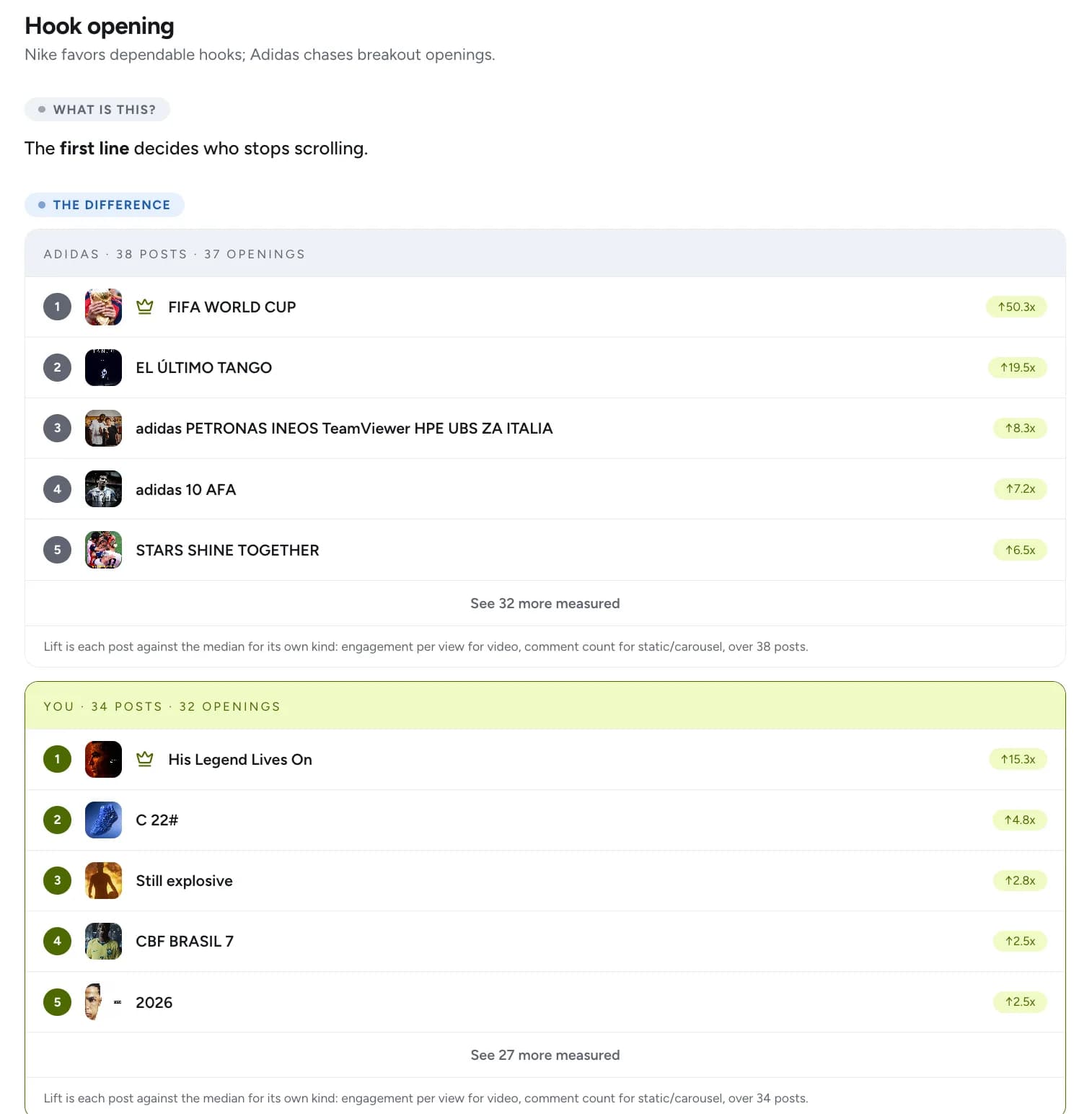
Analyze your direct competitors to understand their content strategy, identify market gaps, and benchmark your performance against industry standards.
Even though we’re talking about your Instagram profile audit, keep in mind you’re not the only player on the market. Your target audience is constantly scrolling past content from your competitors. A comprehensive audit must include a clear-eyed look at what other players in your space are doing right (and wrong).
Identify three to five direct competitors and analyze their most engaging posts. What topics are they covering? What formats are they leaning into? More importantly, look for the gaps. What questions are their audiences asking in the comments that aren't being answered?
Competitor tracking isn’t about copying what they do – it’s about understanding the market and target audience preferences. By understanding the competitive landscape, you can adapt proven, high-ROI formats and find unique angles that set your brand apart.
6. Stop Manual Tracking: The Naise AI Advantage
Ditch the spreadsheets and manual calculations by using an AI operator like Naise AI to instantly generate a comprehensive, data-driven audit of your entire social presence.
If you’ve read through this guide and thought, "I don't have the time to manually calculate engagement rates and analyze competitor feeds," you aren't alone. The traditional way of auditing an Instagram account is incredibly tedious and prone to human error. Recommending impossible manual labor, like checking thousands of followers for bots, is impractical for a lean team.
Instead of spending a week gathering data, you can use Naise AI. As your AI Teammate for Marketing, the Dashboard serves as your central command. You simply input your URL, and Naise instantly scrapes public metadata to build a comprehensive brand profile.
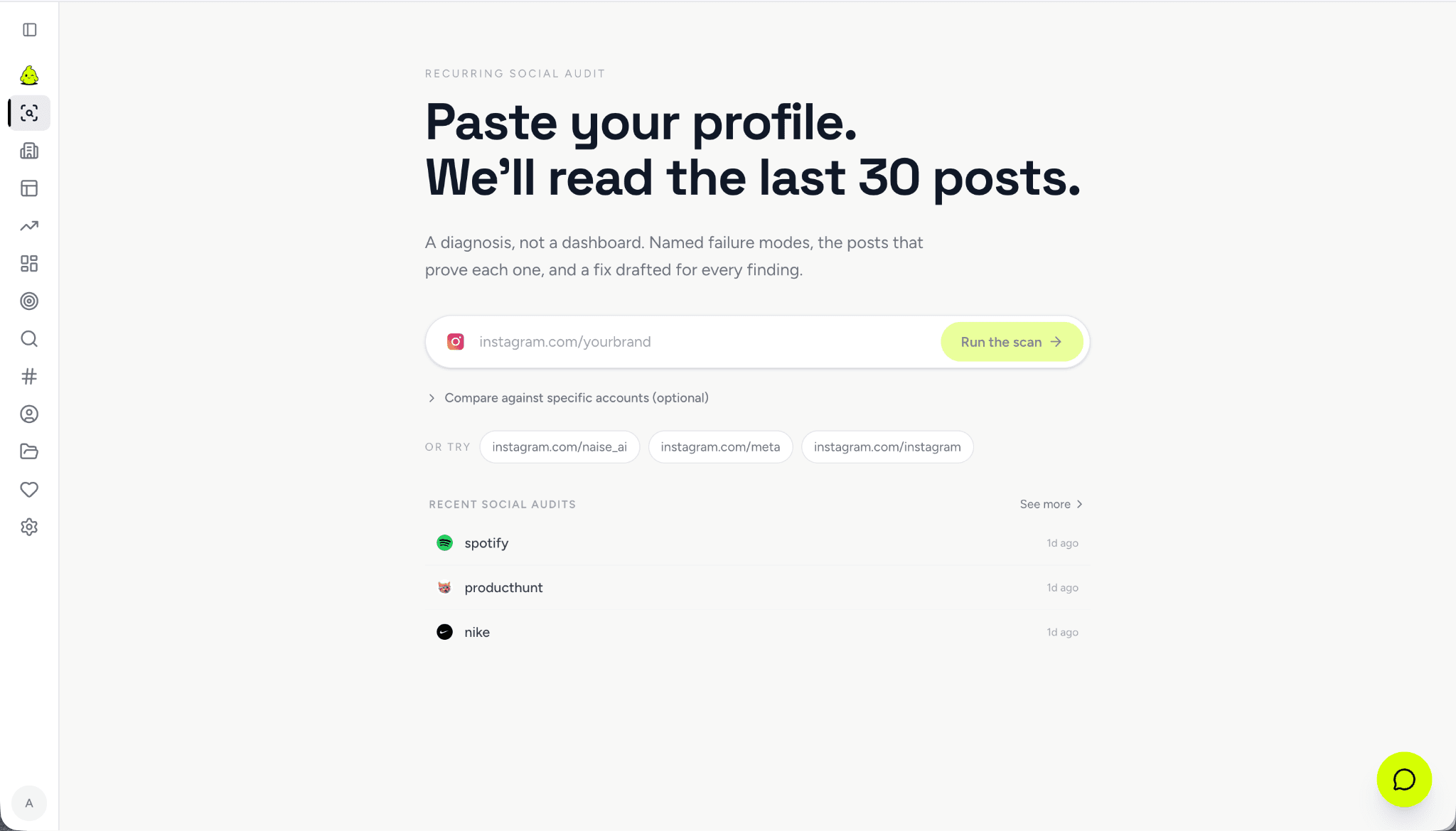
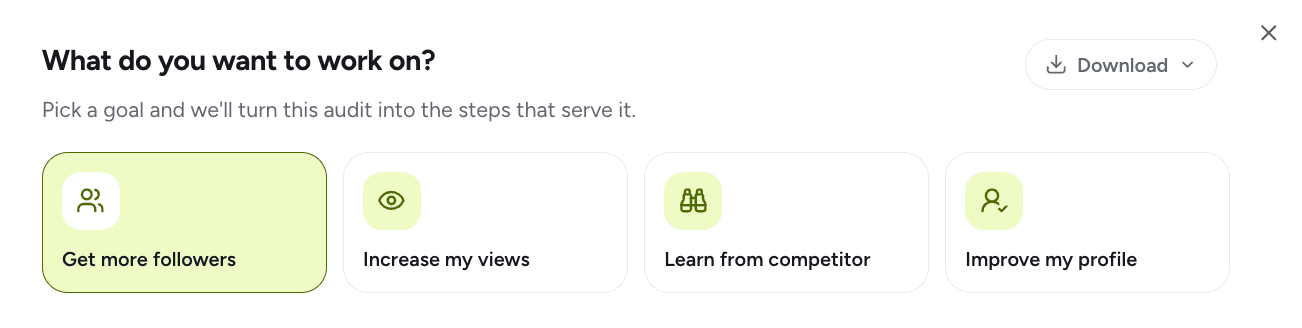
The new Social Audit feature acts as your 13-Point Grading System. It stops the manual analysis and instantly generates a prioritized checklist of actionable fixes for your profile, content formats, and publishing rhythm. It will show you exactly which specific content pillars generate up to 4.5x more interactions, allowing you to reallocate your production budget efficiently. It even sorts your competitor’s highest-performing content by exact view count and view-to-like ratio instantly, giving you the objective data you need to adapt proven formats.
Conclusion
Auditing your Instagram presence shouldn't be an annual chore that you dread. By shifting your focus from vanity metrics to ROI, analyzing your content efficiency, and keeping a close eye on the competition, you can build a strategy that actually drives growth.
And if you want to eliminate the heavy overhead of manual research, it's time to bring on an AI teammate. Let the machine do the data crunching so you can focus on the creative strategy.
Run a Free 60-Second Social Audit Now: https://naise.ai/social-audit
FAQs
How often should I audit my Instagram account? For most brands, a comprehensive audit should be conducted quarterly (every 3 months). This allows you enough time to gather meaningful data on your current strategy while remaining agile enough to adapt to fast-moving platform changes or new algorithmic features.
What is a good engagement rate on Instagram in 2026? While it varies by industry and follower count, a healthy average engagement rate generally hovers between 1% and 3%. However, rather than focusing on an arbitrary number, your primary goal should be to consistently improve your own historical baseline quarter over quarter.
Can an audit help me get more followers? Yes, indirectly. An audit doesn't magically generate followers, but it identifies exactly what content your current audience loves and what they ignore. By doubling down on your top-performing formats, your content becomes more shareable and is more likely to be favored by the algorithm, leading to increased organic reach and new followers.
Do I need paid tools to do an Instagram audit? While you can manually calculate basic metrics using native Instagram Insights and a spreadsheet, it is incredibly time-consuming. Using an integrated AI operator like Naise AI automates the data collection, competitor analysis, and metric benchmarking, saving you hours of manual labor and providing deeper, actionable insights.