The biggest bottleneck in marketing isn't distribution; it is ideation. If you want to know how to generate endless content ideas without burning out your creative team, you need to stop brainstorming from scratch and start leveraging structured frameworks like the "One-to-Many" model and active audience listening. Eventually, scaling this process requires moving past manual prompts and utilizing automated AI playbooks to handle the heavy lifting.
The Myth of the "Lightbulb Moment"
Marketers generate endless content ideas not by waiting for random inspiration, but by using structured frameworks that turn one successful core concept into dozens of tangential topics and varied formats.
There is a dangerous myth in content marketing that great ideas strike like lightning. This leads teams to sit in agonizing, hour-long brainstorm meetings, staring at a whiteboard, waiting for a lightbulb moment that rarely comes. When the pressure is on to feed multiple social channels, a company blog, and a weekly newsletter, relying on spontaneous creativity is a recipe for severe burnout.
Prolific creators do not have a magical well of inspiration; they have a system. They understand that the goal isn't to invent a brand new, revolutionary concept every Tuesday. The goal is to find one concept that resonates and ruthlessly dissect it.
This shift in mindset—from "inventing" to "extracting"—is the foundation of scalable content creation. When you stop trying to serve internal stakeholders with entirely disparate campaigns and start deeply analyzing what your audience actually engages with, the blank page syndrome disappears.
In early 2026, 28% of marketers identified “finding new content ideas” as one of their top content marketing challenges, according to HubSpot’s 2026 State of Marketing data.
The "Do More With It" Framework
When a piece of content performs well, do not pivot to a new topic; instead, lean into the successful idea by creating tangents, different formats, and deep dives based on that single proven concept.
The most common mistake lean marketing teams make is abandoning a winning idea too quickly. You publish a post about "SEO basics," it gets incredible traction, and your immediate reaction is, "Great, that worked! Now let's write about email marketing." You just sprinted away from a proven winner.
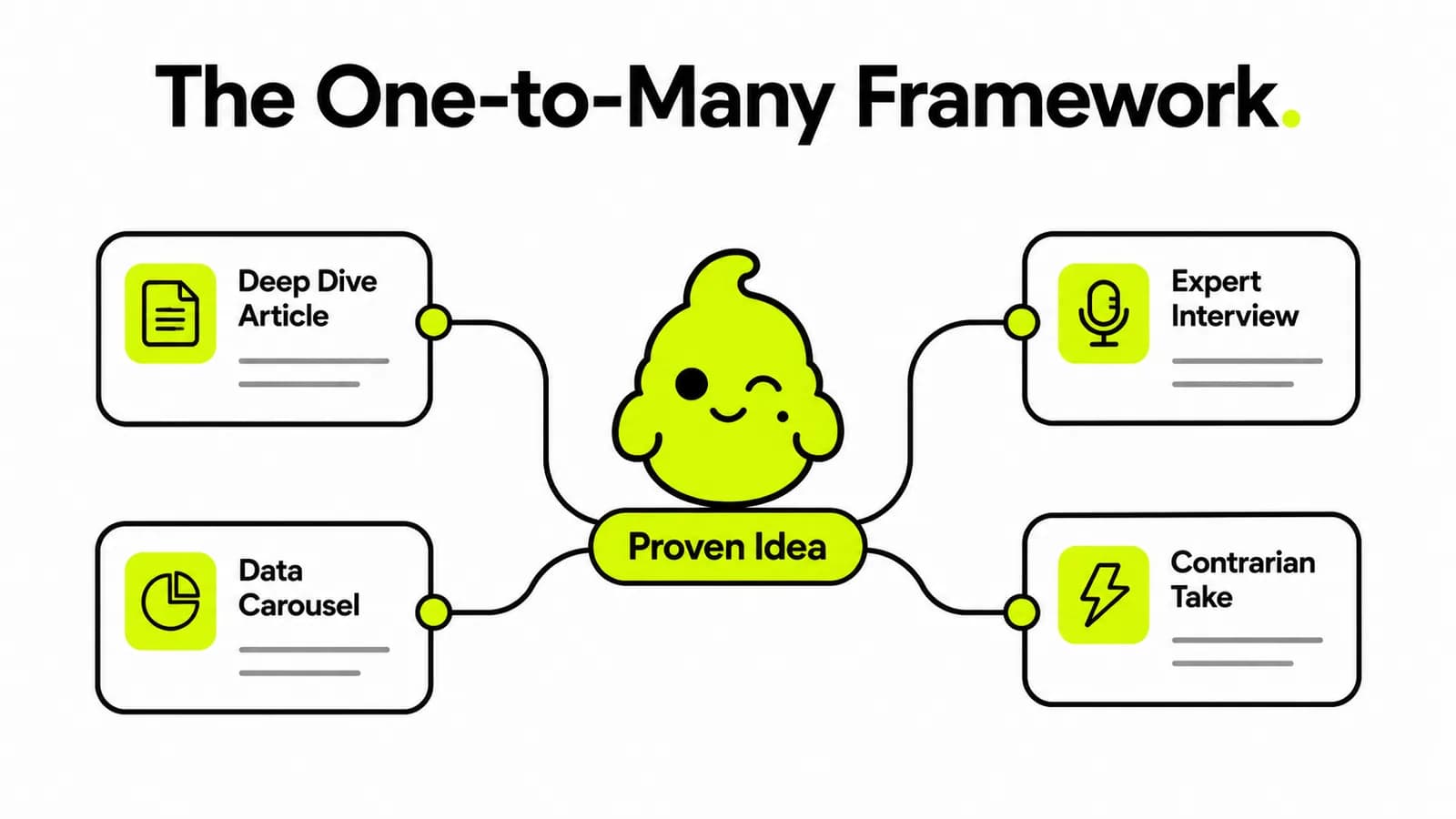
Instead of doing more like it, you need to do more with it. If the SEO basics post worked, you have just been handed a goldmine. Your audience actively told you they care about this topic. This is where you apply the "One-to-Many" framework:
The Deep Dive: Take one paragraph from the original post and expand it into its own 1,000-word article.
The Format Shift: Turn the core statistics of the article into a carousel for LinkedIn or Instagram.
The Expert Angle: Interview an industry expert on the exact topic and publish the Q&A.
The Contrarian Take: Write a follow-up post arguing against a commonly held belief mentioned in the original piece.
By leaning into what works, you aren't just guessing; you are building a highly relevant web of content based on verified audience interest.
Active Listening Over Passive Scrolling
Generate fresh ideas by actively monitoring audience pain points through blog comments, sales call transcripts, and specialized tools like AnswerThePublic or Google Trends, rather than just passively consuming social media.
Your audience is literally telling you what to write about every single day; you just have to know where to look. While brainstorming in a vacuum is difficult, answering direct questions is easy.
Shift your focus from passive consumption to active listening. The comments section of your existing blog posts, your competitor's YouTube videos, and niche Reddit communities are absolute goldmines for content ideas. If someone asks a detailed question, that is a blog post waiting to happen.
Furthermore, leverage your internal teams. Your sales and customer success departments talk to your target ICP every day. Ask them for the top three objections they hear on sales calls, or the most common point of confusion during onboarding. Answering these specific, bottom-of-funnel pain points creates highly converting content that directly supports revenue.
Automating Ideation with Naise AI Playbooks
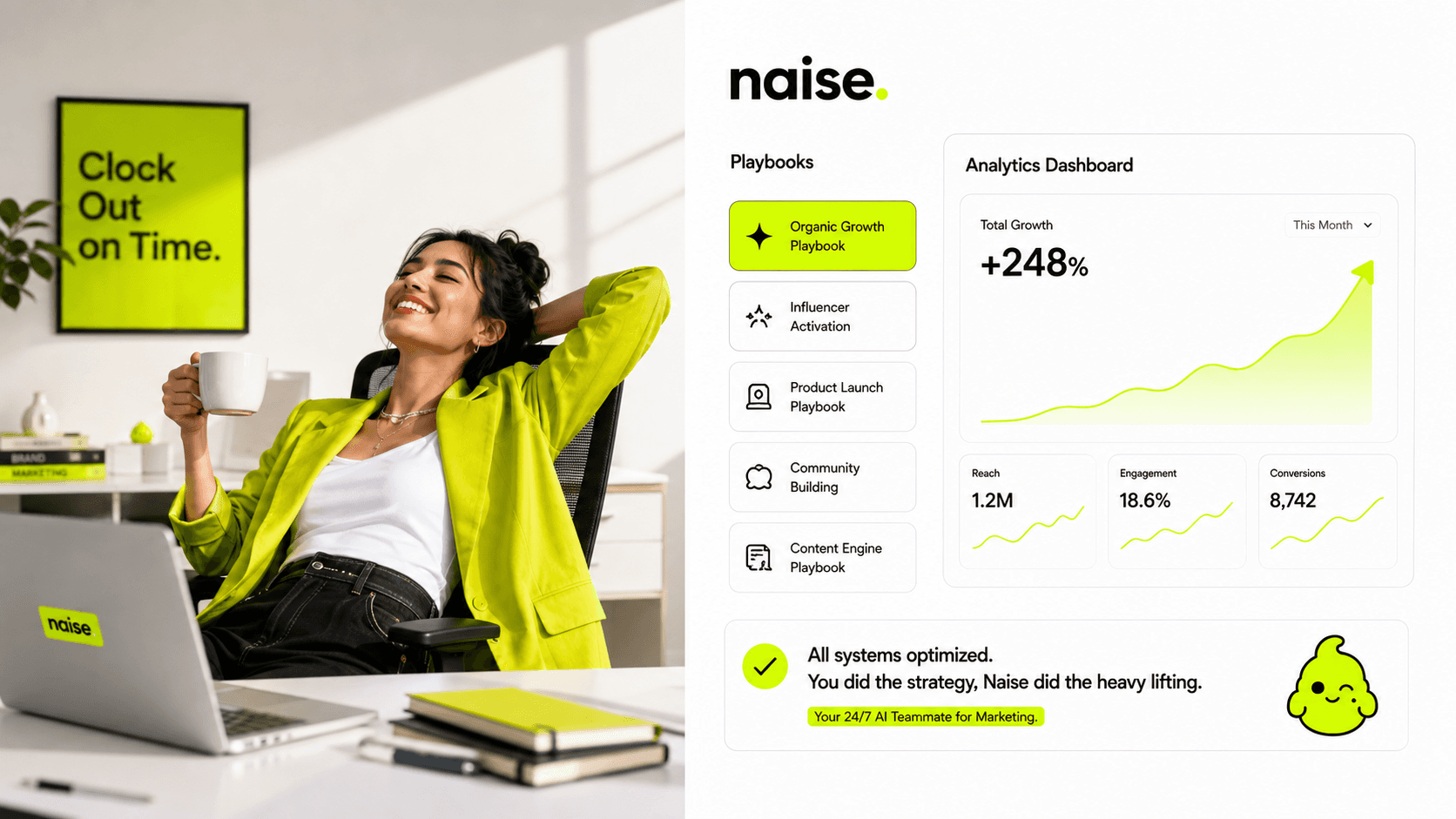
Naise AI eliminates the ideation bottleneck by offering pre-built Playbooks—expert-level prompt templates that automatically generate strategy-backed content ideas aligned with your specific brand voice.
Understanding the frameworks for generating ideas is crucial. But even with the best systems, manually executing the "One-to-Many" model takes significant time. You still have to sit down, stare at the blinking cursor, and prompt generic AI tools, hoping they don't spit out robotic slop. This is known as "prompt fatigue," and it is killing your team's productivity.
You don't just need ideas; you need execution. This is where a fragmented tech stack fails and where an autonomous operator like Naise AI takes over.
Naise eliminates the blank page entirely by removing the need for manual prompting. Instead of guessing how to ask an AI for ideas, you simply deploy our Playbooks.
Here is how you generate a month's worth of content in minutes:
Lock in the Context: Upload your brand guidelines to your Projects folder. Naise never breaks character and understands exactly who your audience is.
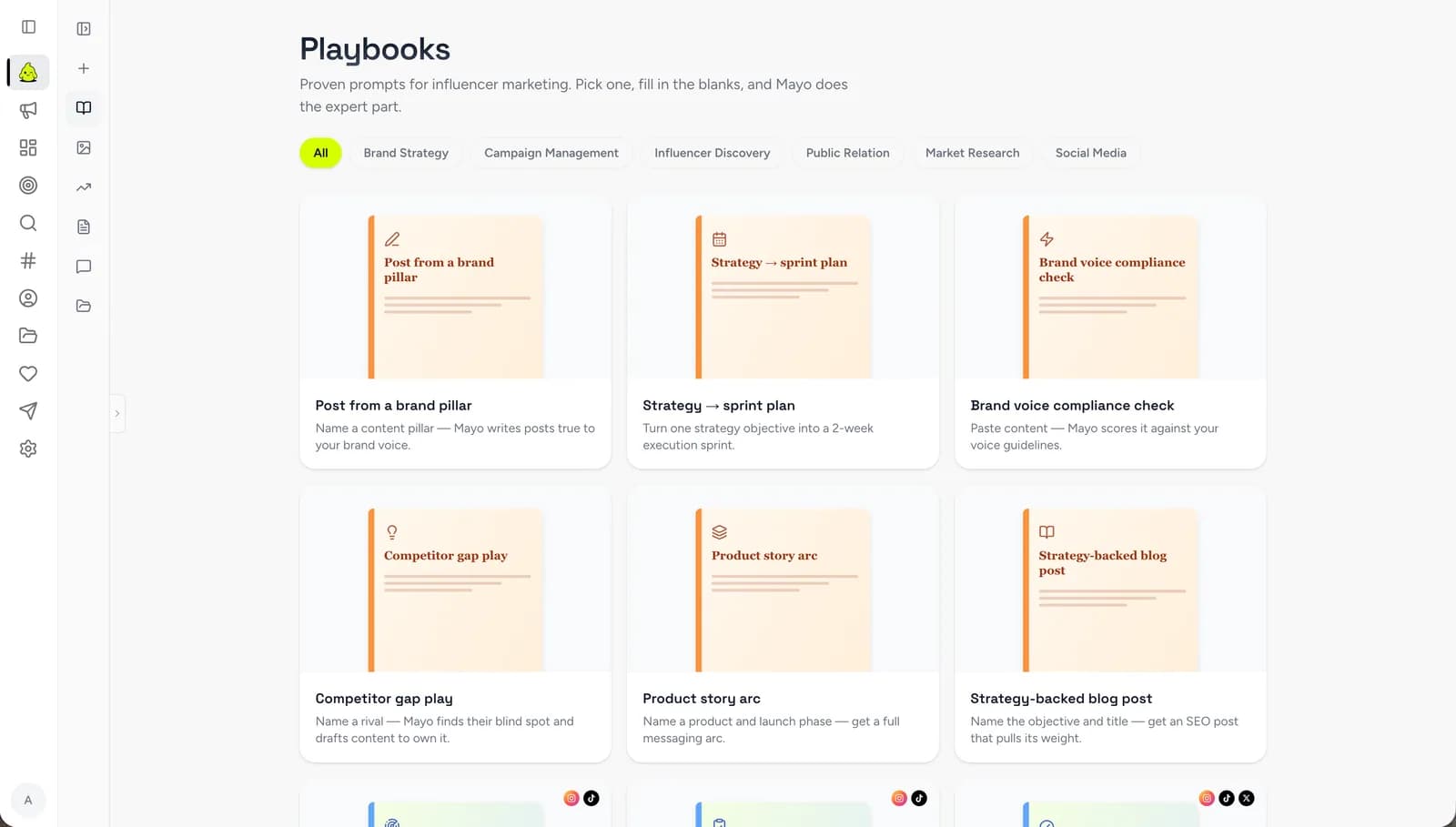
Open the Dashboard: Select a pre-built Playbook like "Post from a brand pillar" or "Competitor gap play." These are not basic prompts; they are complex, agency-level instructions hardcoded into the system.
Deploy the Agent: You simply fill in a few blanks (e.g., name the competitor, name the product), and the SMM Agent autonomously generates a web of highly specific, on-brand content ideas and the actual drafted posts to match.
Clock out on time: Review the generated campaigns, approve the best ones, and let Naise handle the scheduling.
Learning how to generate endless content ideas is about shifting from random brainstorming to structured extraction. By leaning into proven concepts and actively listening to your audience, you build a foundation of relevance. However, to truly scale your output without burning out, you must automate the ideation process. Stop wrestling with generic AI prompts and let our structured playbooks do the heavy lifting, so you can get back to high-level strategy.
FAQs
How do you never run out of content ideas?
You never run out of ideas by utilizing the "One-to-Many" framework. When a single piece of content performs well, don't move on to a new topic. Instead, dissect that proven idea into deep dives, alternative formats (like carousels or podcasts), and contrarian takes.
Where is the best place to find content ideas?
The best ideas come directly from your audience. Actively monitor blog comments, niche Reddit forums, and customer support tickets. Additionally, ask your sales team for the most common objections they hear, as answering these pain points creates highly effective content.
What is "prompt fatigue" in content creation?
Prompt fatigue occurs when marketers spend excessive time tweaking and rewriting instructions for generic AI text generators, trying to get them to output on-brand content. It replaces the time saved by AI with the administrative burden of complex prompting.
How do Naise AI Playbooks help with content ideation?
Naise AI Playbooks eliminate prompt fatigue by providing pre-configured, expert-level prompt templates built directly into the platform. Users simply select a strategy (like a competitor analysis), and the AI automatically generates dozens of relevant content ideas aligned with their specific brand voice.