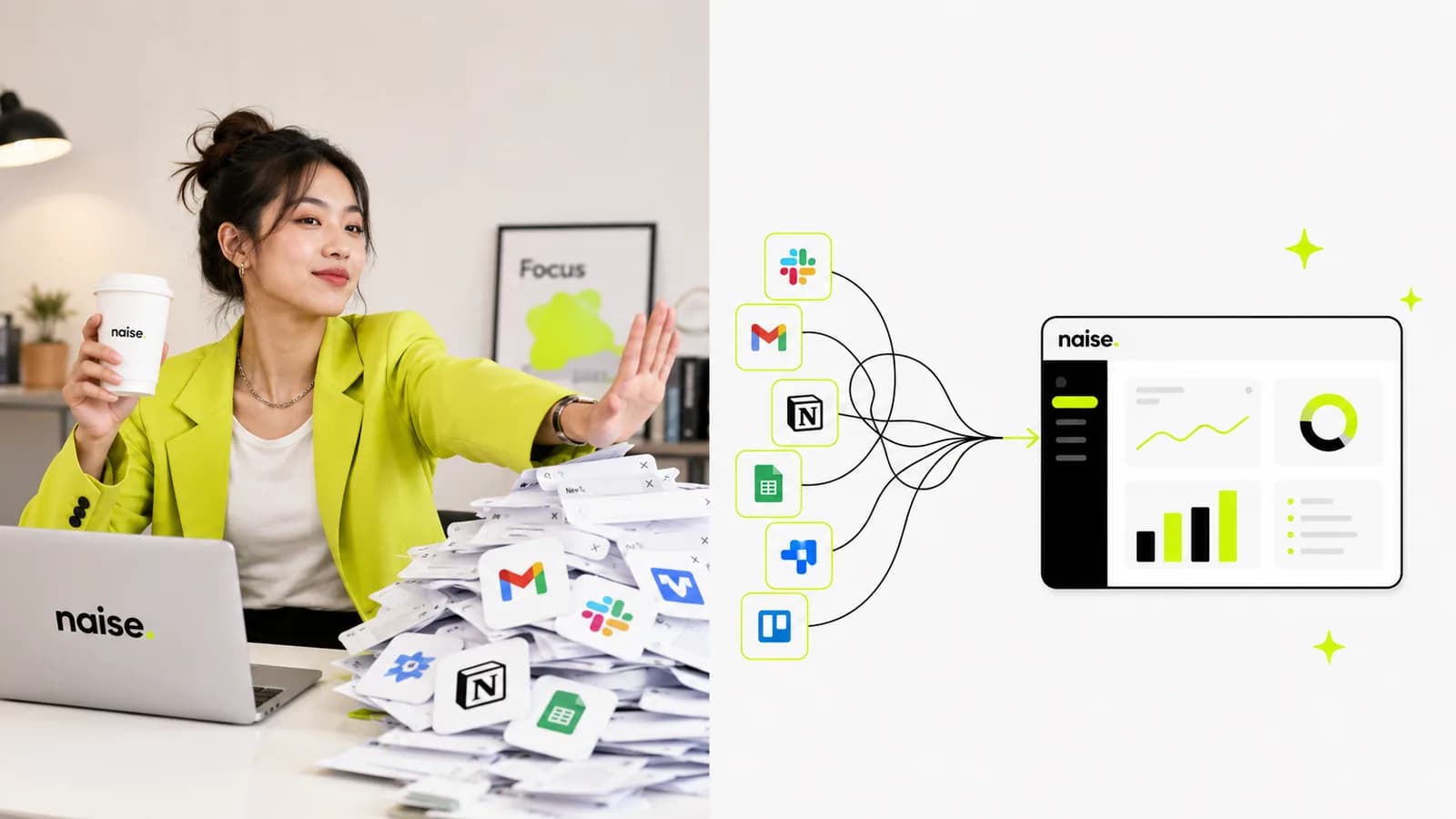
The "Franken-Stack" Trap: Why Eight Cheap Tools Cost More Than One
Connecting multiple standalone marketing apps creates severe integration friction, broken data syncs, and hidden overhead that destroys team productivity.
Most founders start building their stack by grabbing every single "free" tool on the market. You grab HubSpot for lead capture, Mailchimp for newsletters, Buffer for posting, and Zapier to tie everything together.
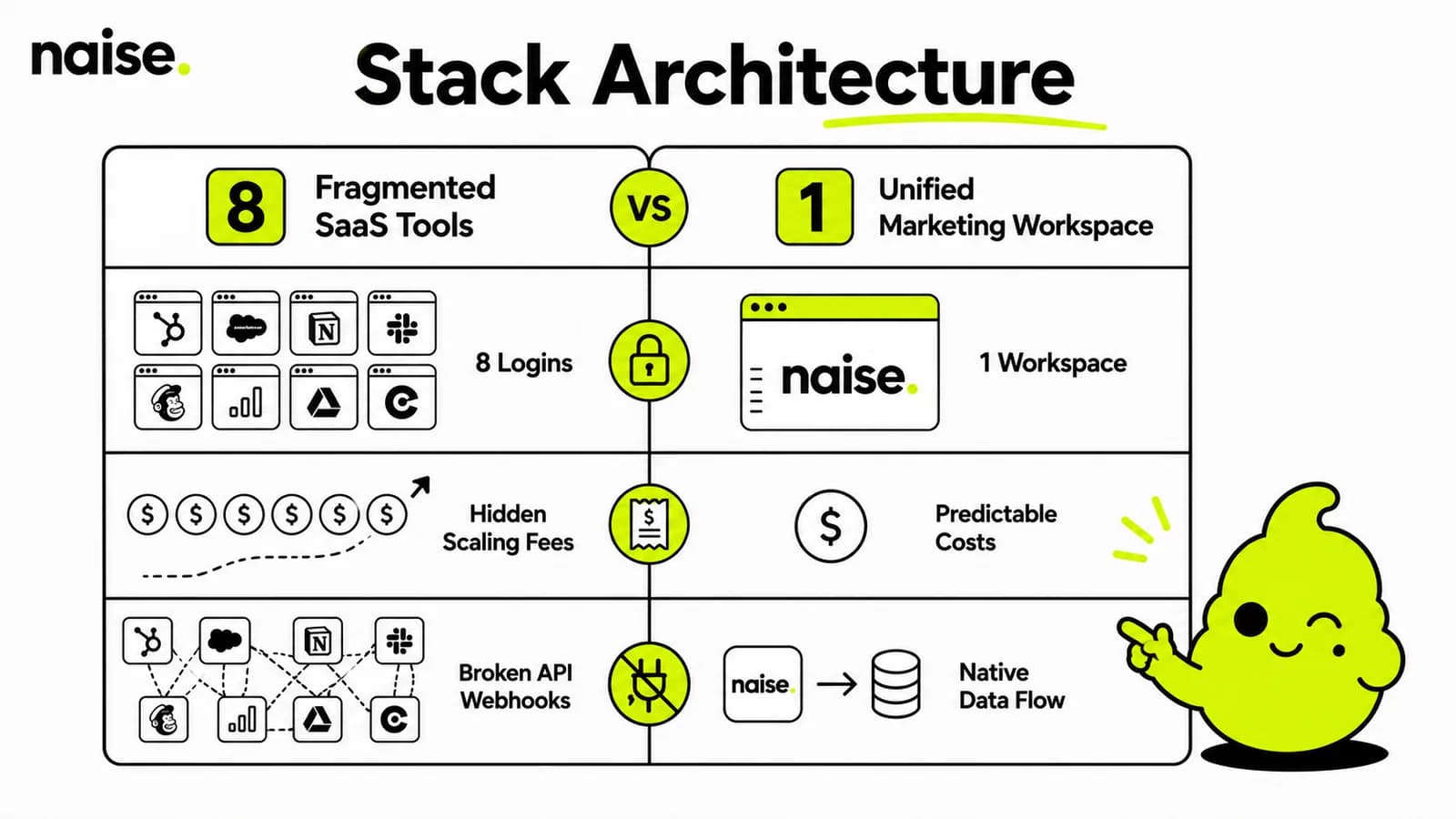
This approach builds a fragile web known as the Franken-Stack. When one API connection breaks, your whole Lead Generation pipeline halts without warning.
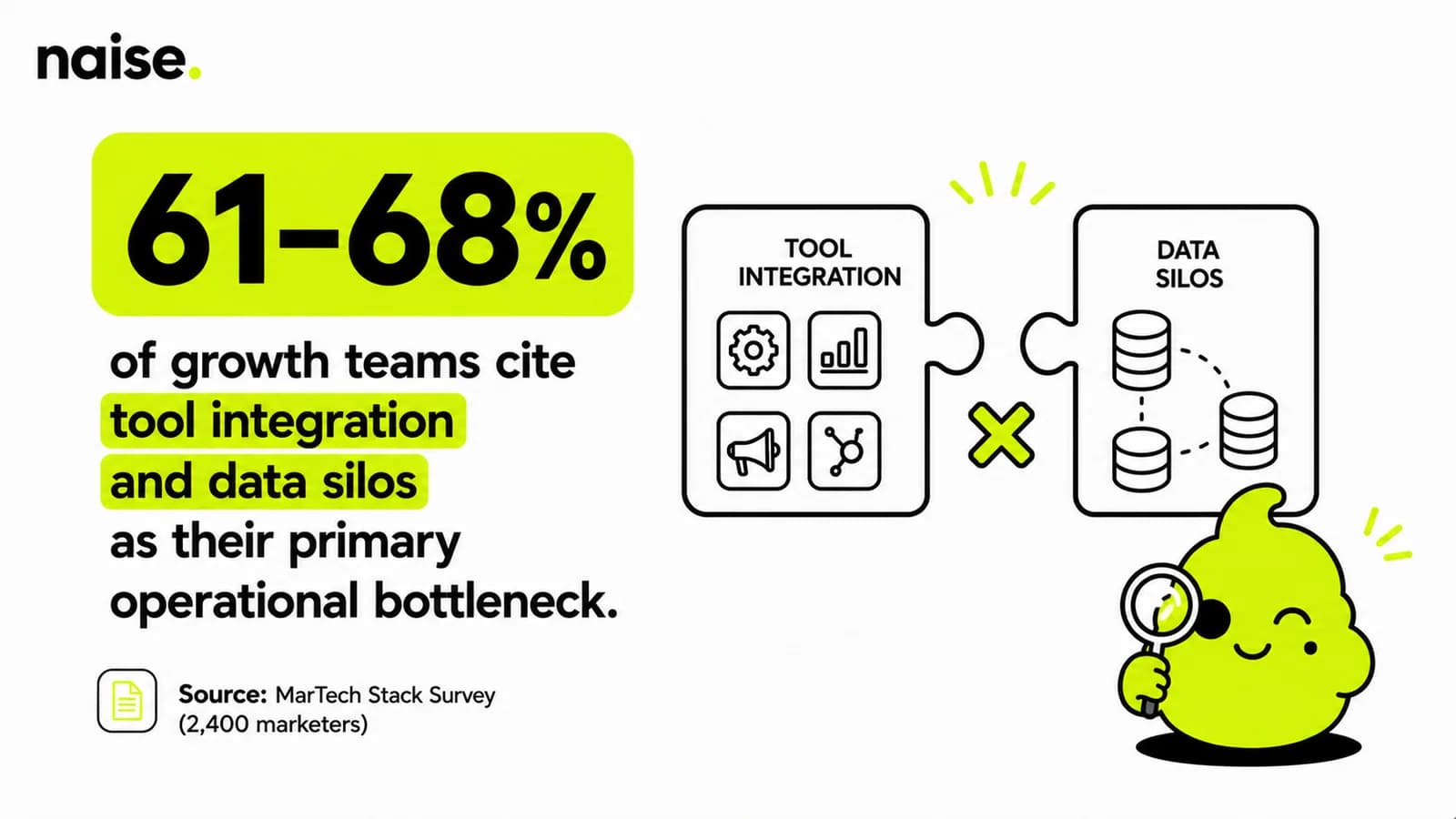
Instead of focusing on creative strategy, your team spends hours troubleshooting broken webhooks and duplicate records across different databases. True productivity comes from consolidation.
The Hidden Scaling Costs of "Free Tier" SaaS
Freemium marketing tools lure users with basic free features but impose massive price hikes as soon as contact limits or basic automation rules are unlocked.
Freemium plans look attractive until your database actually starts growing. Software vendors design their pricing tiers to charge exponential rates once you hit active lead milestones.
For instance, Mailchimp and HubSpot offer accessible entry points, but unlocking multi-step Email Automation or expanding your list past basic limits instantly pushes your bill into hundreds of dollars per month.
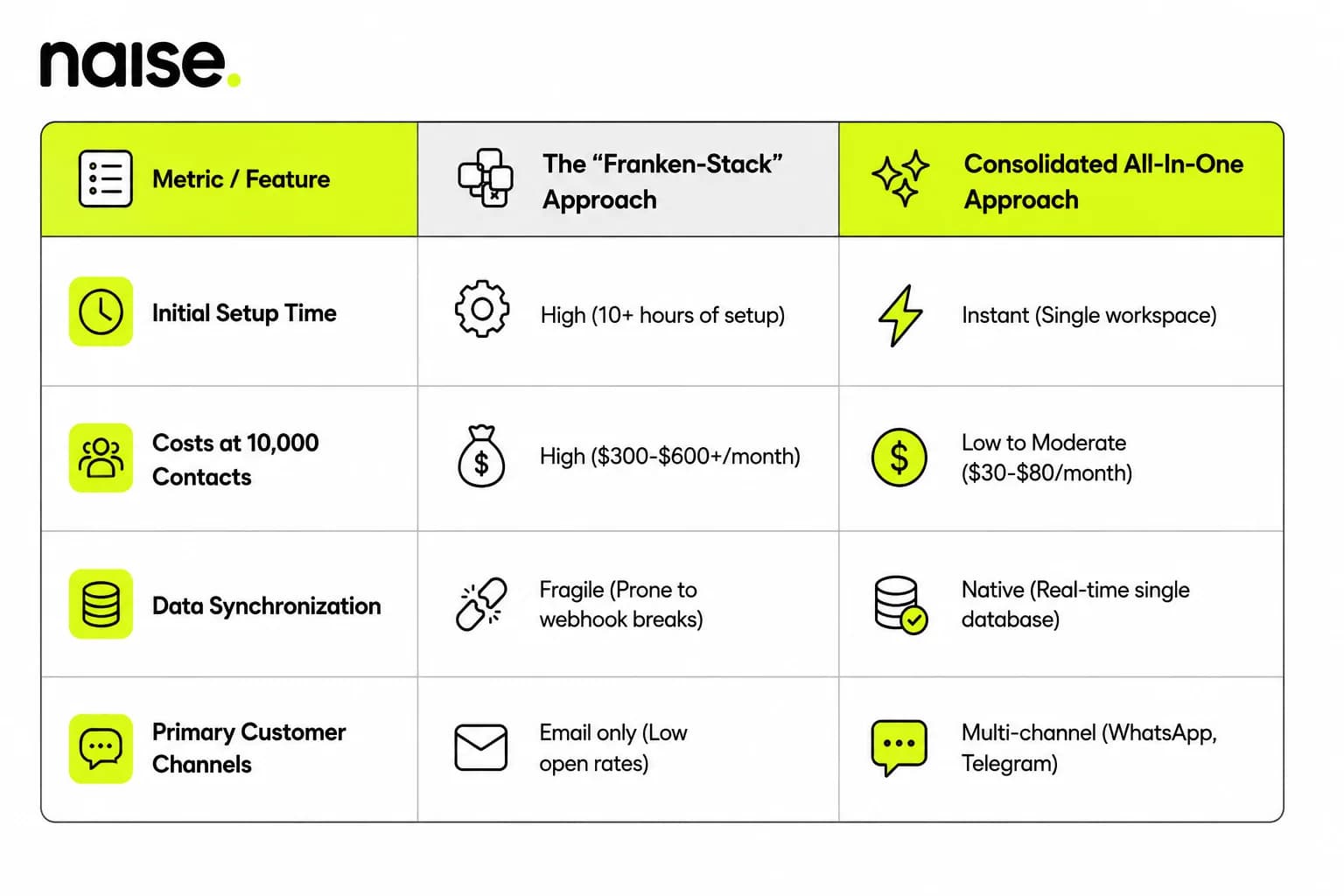
Additionally, tools like ActiveCampaign or Klaviyo charge strictly based on list size, punishing you for holding cold contacts. If you do not continuously prune your lists, you pay premium rates for dead storage.
Modern All-In-One Alternatives That Simplify Your Workflow
Consolidated platforms like Brevo and Zoho eliminate multi-vendor chaos by housing CRM, email, and landing pages inside a single workspace.
If you want affordable marketing tools with easy setup, look past single-feature tools and evaluate unified platforms. Platforms like Brevo and Zoho consolidate your Customer Relationship Management, email broadcasts, and page builders under one billing account.
By keeping your customer records in one place, you remove the need for constant data syncing through middleware like Make or Zapier. Your team saves time and avoids software fatigue.
Expanding Beyond Western Email: Mobile-First Channels
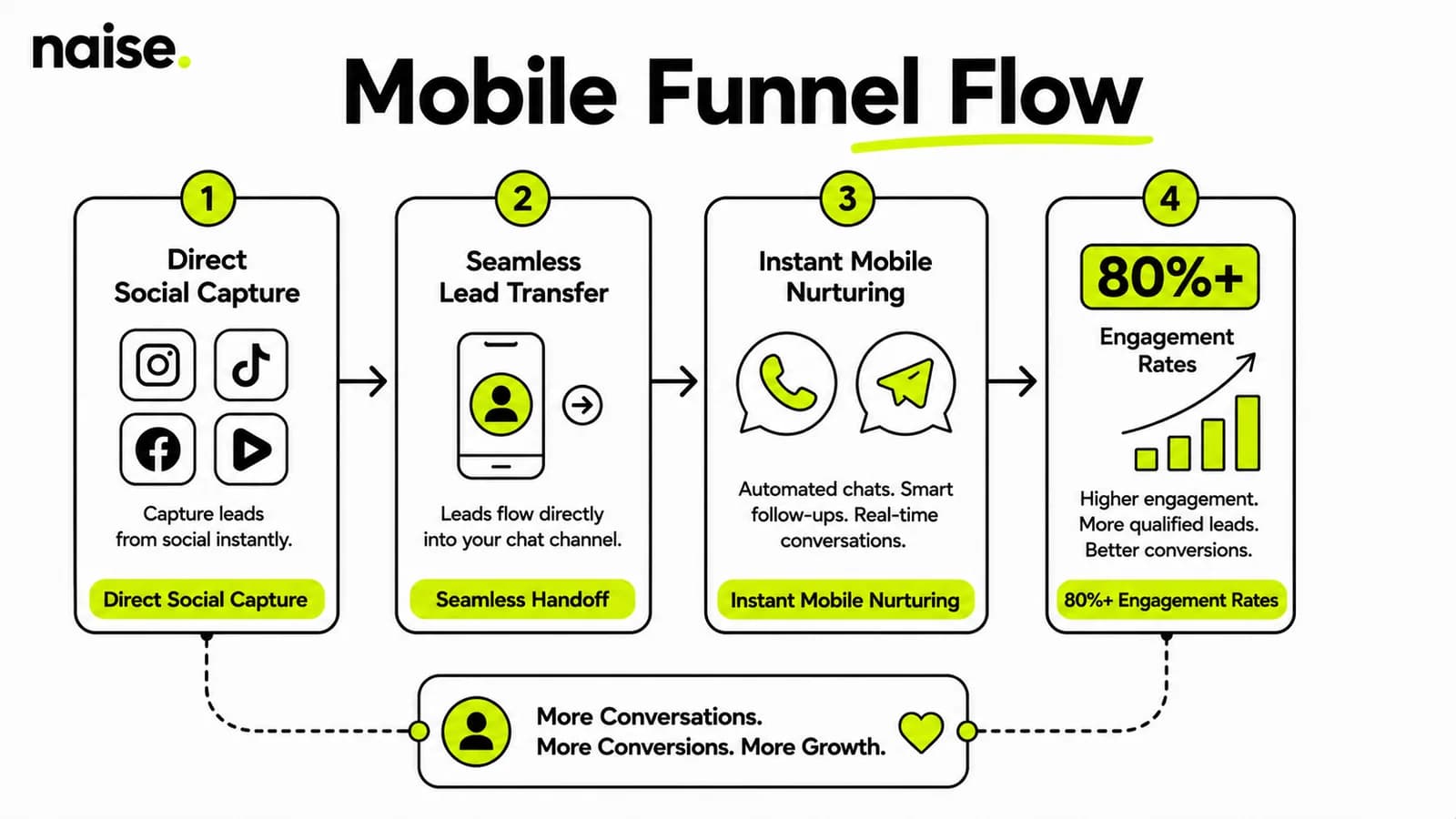
Modern global marketing requires direct mobile engagement through platforms like WhatsApp and Telegram, which deliver significantly higher open rates than conventional email.
Relying solely on traditional inbox delivery leaves massive revenue on the table. In many global markets across Asia, LATAM, and Europe, customers ignore promotional emails entirely.
Integrating WhatsApp Business API or Telegram channel marketing into your growth stack gives you direct access to high-intent buyers. These conversational platforms achieve over 80% open rates compared to standard email broadcasts.
Recent benchmarks show WhatsApp marketing messages achieving around 98% average open rates and 45–60% click‑through rates, compared with ~20–22% open rates and 2–5% click‑through rates for traditional B2B email.
When building your Omnichannel Strategy, ensure your stack handles mobile messaging alongside traditional Content Marketing. Bridging these channels creates a frictionless buyer journey without extra complexity.
How Naise AI Replaces Tool Chaos with an Autonomous AI Teammate
Naise AI replaces the fragmented software stack by operating as a centralized AI workspace that executes social campaigns, research, and content creation natively.
Managing multiple software subscriptions and fighting prompt fatigue wastes hours every single week. Instead of stitching together separate tools for post scheduling, brand research, and visual generation, Naise AI serves as your unified marketing operator.
Here is how you transform chaotic campaign planning into an effortless workflow inside Naise AI:
Upload Context into Projects: Drop your brand guidelines, customer profiles, and product PDFs into Projects just once. Naise AI creates a persistent memory bank so every campaign automatically aligns with your brand voice.
Launch Central Command via Naise Chat: Open Naise Chat inside the Dashboard to command your campaign objectives without re-explaining your product details.
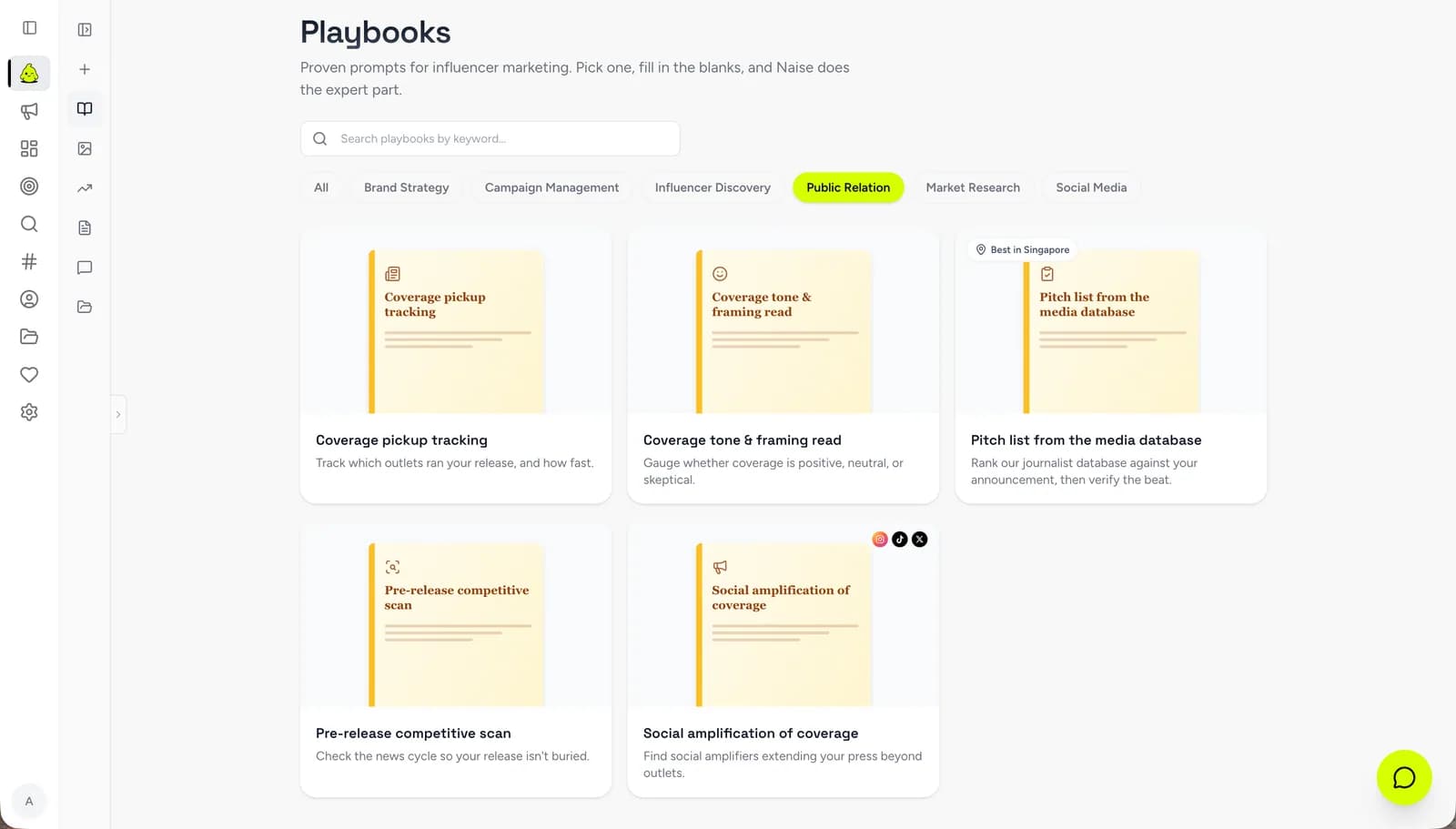
Select a Pre-Built Playbook: Pick an agency-grade framework from Playbooks to eliminate blank page syndrome and instantly structure your strategy.
Deploy the SMM Agent: Hand off execution to the SMM Agent, which generates on-brand visual assets, writes tailored captions, locks in tone rules, and schedules posts directly across your channels.
Stop letting fragmented software stacks and sudden price spikes slow down your marketing momentum. By choosing consolidated platforms and leveraging autonomous execution, you can run high-impact campaigns without heavy operational overhead. Experience how an intelligent workspace simplifies your growth strategy today.
Frequently Asked Questions (FAQs)
What makes a marketing tool easy to set up?
A tool is easy to set up when it offers native features, intuitive onboarding, and a single unified database. Avoiding complex third-party API webhooks ensures your team can launch campaigns in minutes rather than spending days configuring workflows.
Why do free marketing tool tiers become expensive quickly?
Freemium tiers usually cap active contact limits, email sending volumes, or advanced workflow triggers. Once your marketing campaigns start generating traction, forced upgrades kick in, jumping costs from free to hundreds of dollars per month.
Should small teams use an all-in-one platform or specialized software?
Lean teams benefit significantly from unified all-in-one platforms because they eliminate tool fatigue and context switching. Managing a single platform reduces software management time and prevents data synchronization failures.
How do WhatsApp and Telegram fit into modern marketing stacks?
Mobile channels like WhatsApp and Telegram complement traditional channel stacks by offering direct, instant communication with customers. They generate dramatically higher open rates and engagement compared to traditional email campaigns, especially in global markets.