Most finance guides suggest stacking three different applications to handle cards, receipts, and invoicing. They treat expense tracking like a generic corporate problem, completely ignoring how marketing and creative agencies actually operate.
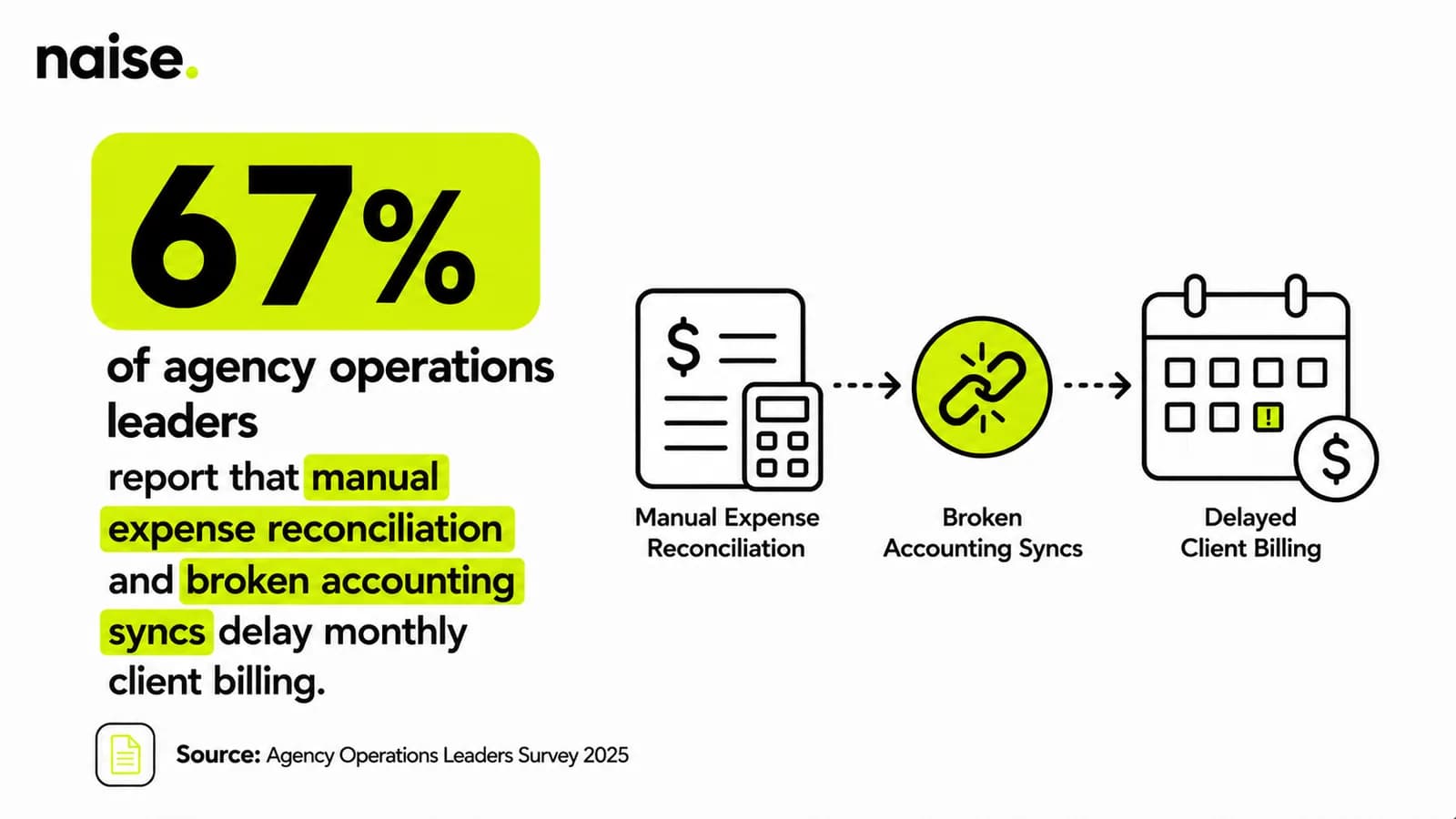
When you run an agency, expenses are directly tied to client deliverables, ad platforms, contractor markups, and global campaigns. Pushing data across disconnected platforms creates integration friction, causing manual reconciliation headaches and expensive accounting errors.
The 4 Operational Blind Spots in Standard Expense Tools
Before evaluating software, you must identify four major traps that destroy agency profitability:
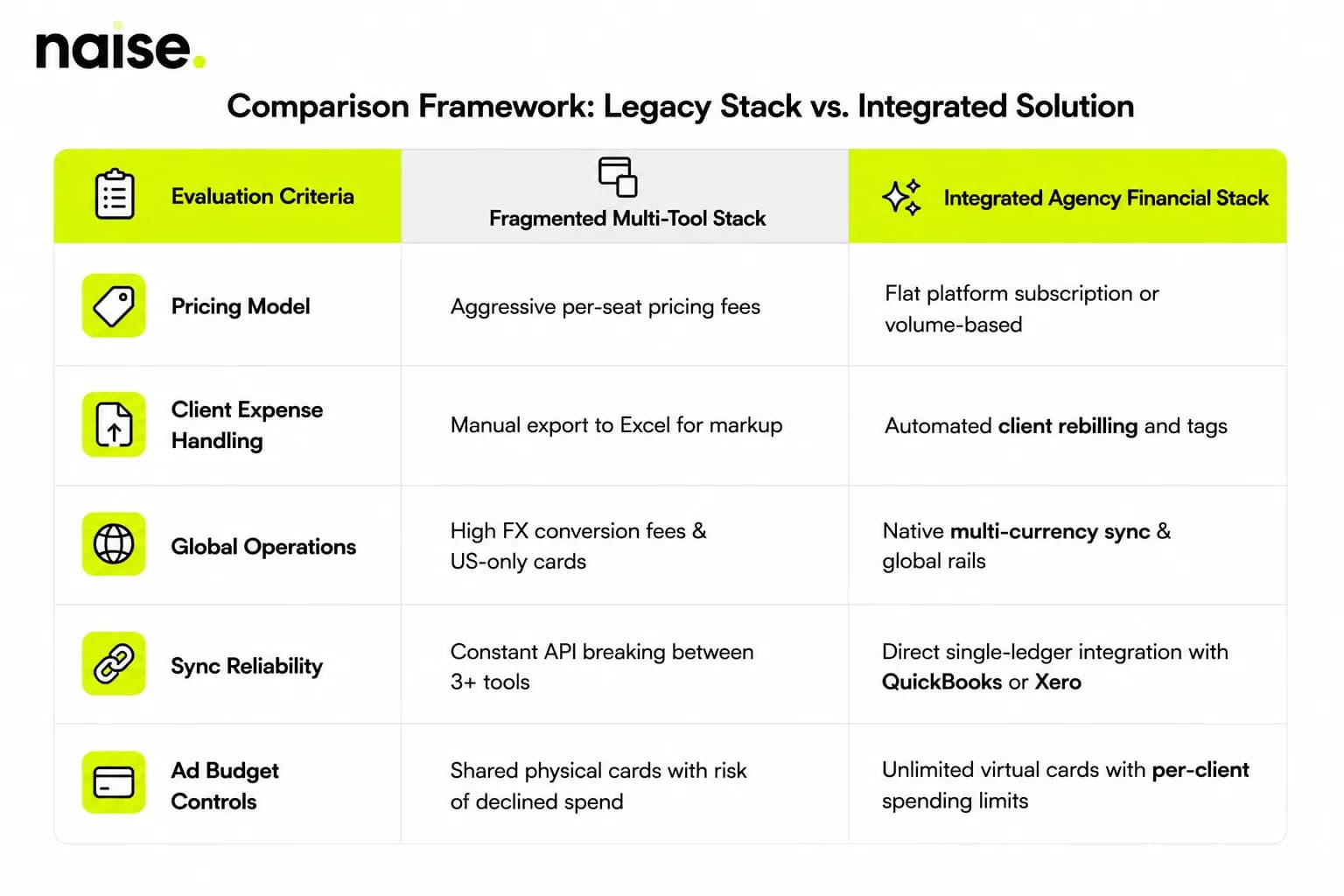
The Per-Seat Pricing Trap: Platforms like Expensify or Harvest charge monthly fees per user. As your team grows, user seat costs eat into your retainers, penalizing you simply for expanding your headcount.
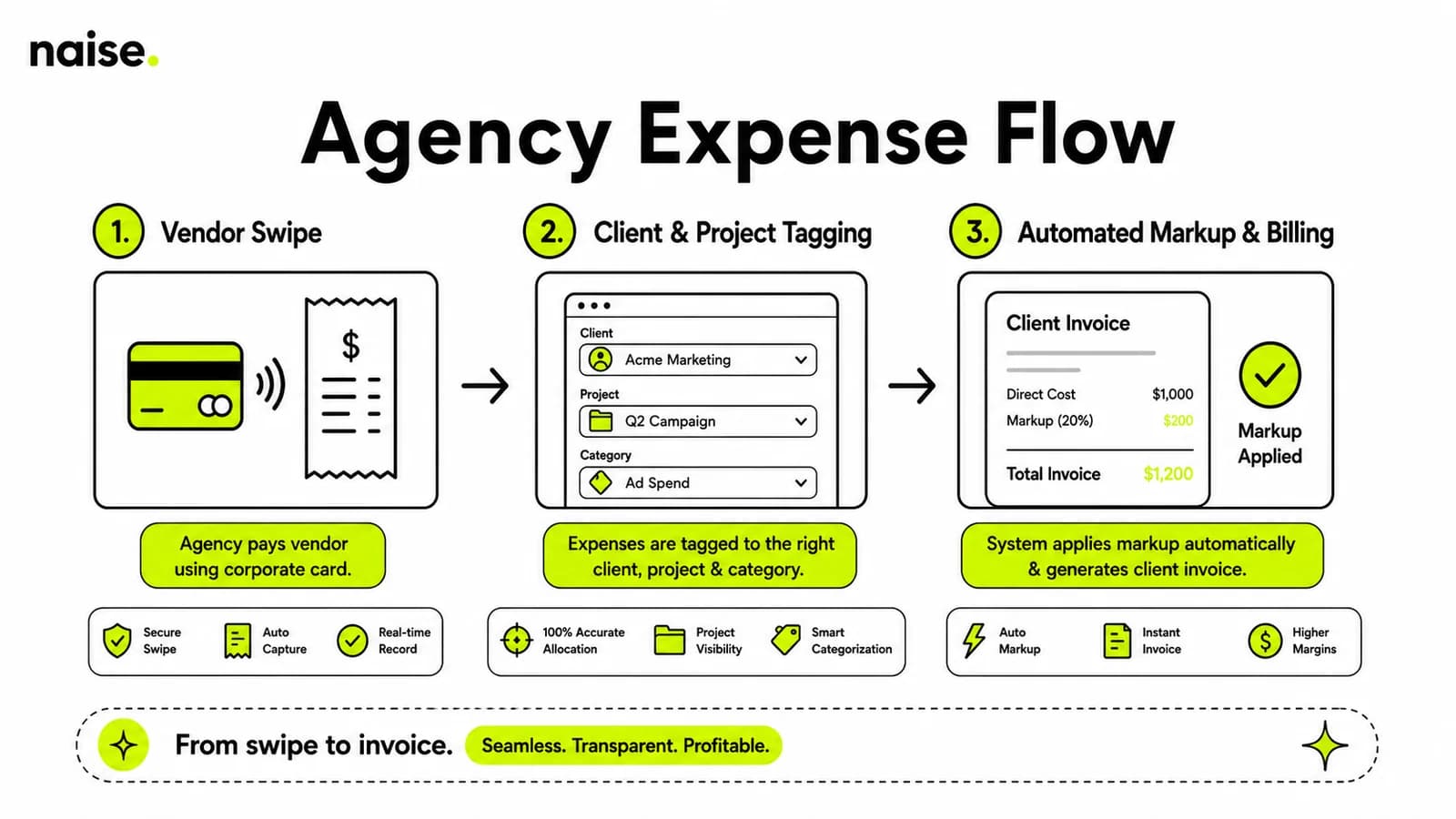
The Client Rebilling Blind Spot: Standard corporate tools record costs as overhead, failing to support client rebilling. Agencies need the capability to tag expenses to specific client accounts, add markups, and pass out-of-pocket costs directly to invoices.
US-Centric Financial Bias: Built-in corporate cards like Ramp or BILL offer great automation, but they are restricted to US-registered entities. International teams handling global media buying require robust multi-currency sync and cross-border payment support.
Business Model Mismatch: A retainer-based agency managing internal payroll needs different controls than a media-buying agency managing massive variable ad spend across platforms like Google Ads and Meta Ads.
Categorizing Expense Tools by Agency Tier and Need
Tier 1: Micro-Agencies & Boutique Freelancers (1–10 Employees)
At this stage, keeping fixed software costs near zero is essential. You need simplicity without complex per-seat pricing liabilities.
QuickBooks Online: Offers reliable cash flow tracking, expense categorization, and native receipt capture. It integrates easily with Xero and Stripe, allowing you to rebill clients without expensive add-ons.
Zoho Expense: Provides a generous free tier with automatic receipt scanning. It allows small teams to tag expenses to specific clients before upgrading to enterprise stacks.
Wise for Business: Ideal for international boutique teams needing local multi-currency accounts without foreign transaction fees.
Tier 2: Mid-Sized & Scaling Agencies (10–50 Employees)
Scaling teams face massive operational friction from manual approvals. You require smart corporate cards, automated receipt matching, and flexible client rebilling.
Brex: Excellent for high-growth tech and marketing agencies in the US. It grants high credit limits for digital ad spend, issuing dynamic virtual cards per client project.
Pleo: The top financial solution for European and UK-based agencies. It offers smart corporate cards with real-time spending limits, seamless Xero integration, and automated VAT fetching.
Airbase: Perfect for mid-market agencies looking to consolidate procurement, corporate cards, and accounts payable into one system.
Tier 3: Global & Media-Buying Enterprises (50+ Employees)
Agencies managing millions in monthly ad budgets need continuous balance management, fraud prevention, and deep ERP connections.
Payhawk: Combines credit cards, expense management, and global payments in one software platform. It excels at handling international multi-currency sync across global subsidiaries.
NetSuite ERP: Built for enterprise-scale agency groups requiring custom approval workflows, complex billable rate matrixing, and global audit trails.
Comparison Framework: Legacy Stack vs. Integrated Solution
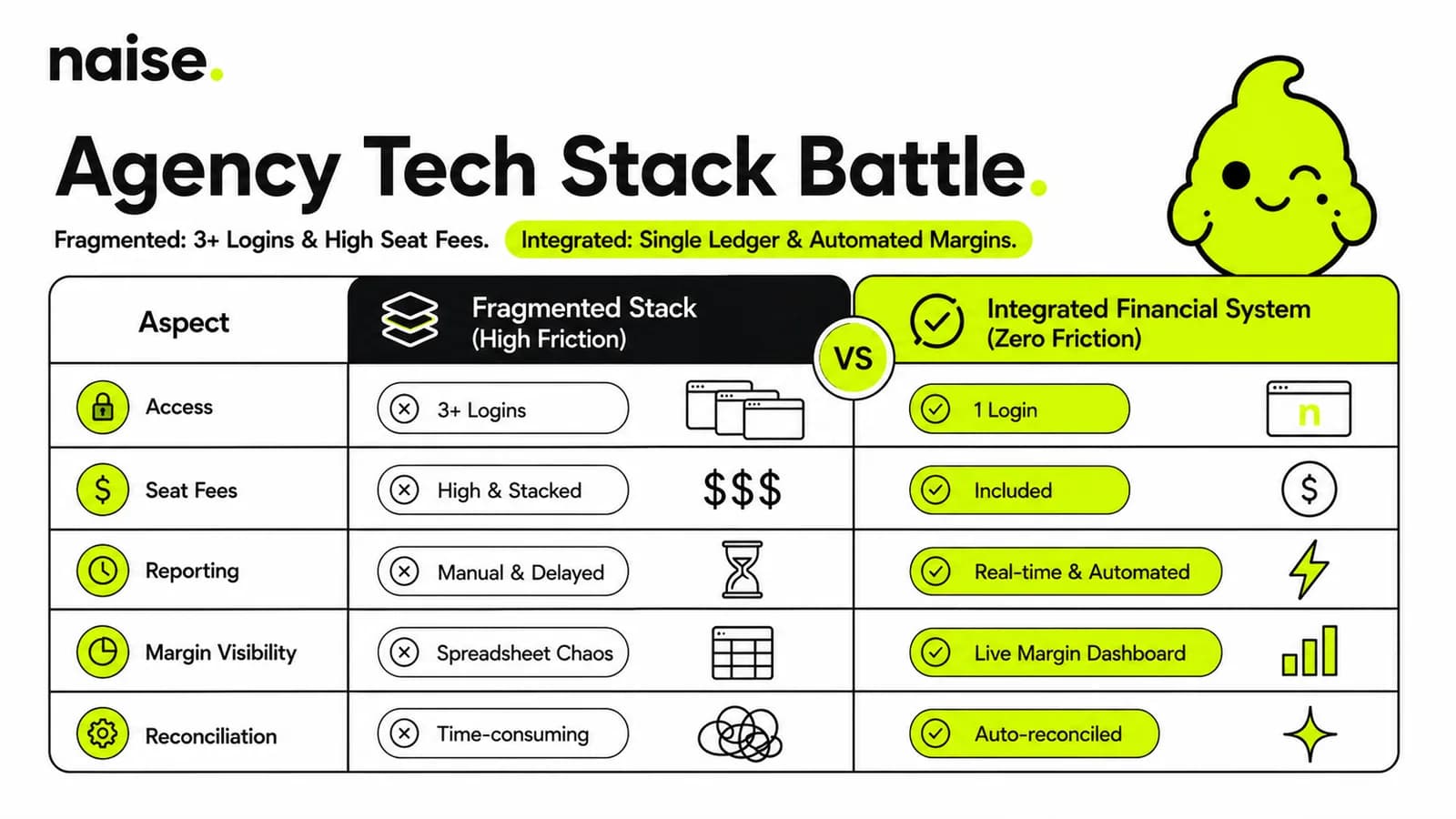
Fixing your agency expense tools solves your financial ledger, but financial chaos is often a symptom of operational fragmentation. When your team spends hours jumping between Asana, spreadsheet budgets, influencer payout sheets, and client briefs, manual execution errors skyrocket.
This is where Naise AI acts as your ultimate AI teammate for marketing operations, eliminating manual administrative work so you can clock out on time.
Instead of managing fragmented workflows across multiple platforms, Naise AI unifies campaign setup, content creation, and creator management inside one intelligent command center.
Centralized Brand Context in Projects: Upload your brand guidelines, past campaign expenditure briefs, and operational rules directly into Projects. Naise AI stores this context permanently, ensuring every generated output aligns with your agency guidelines.
Instant Campaign Execution in Naise Chat: Open Naise Chat and direct your AI operators without writing complex prompts from scratch.
Deploy Pre-Built Frameworks via Playbooks: Select specialized Playbooks built specifically for agency workflows, such as creator discovery, content generation, or PR tracking.
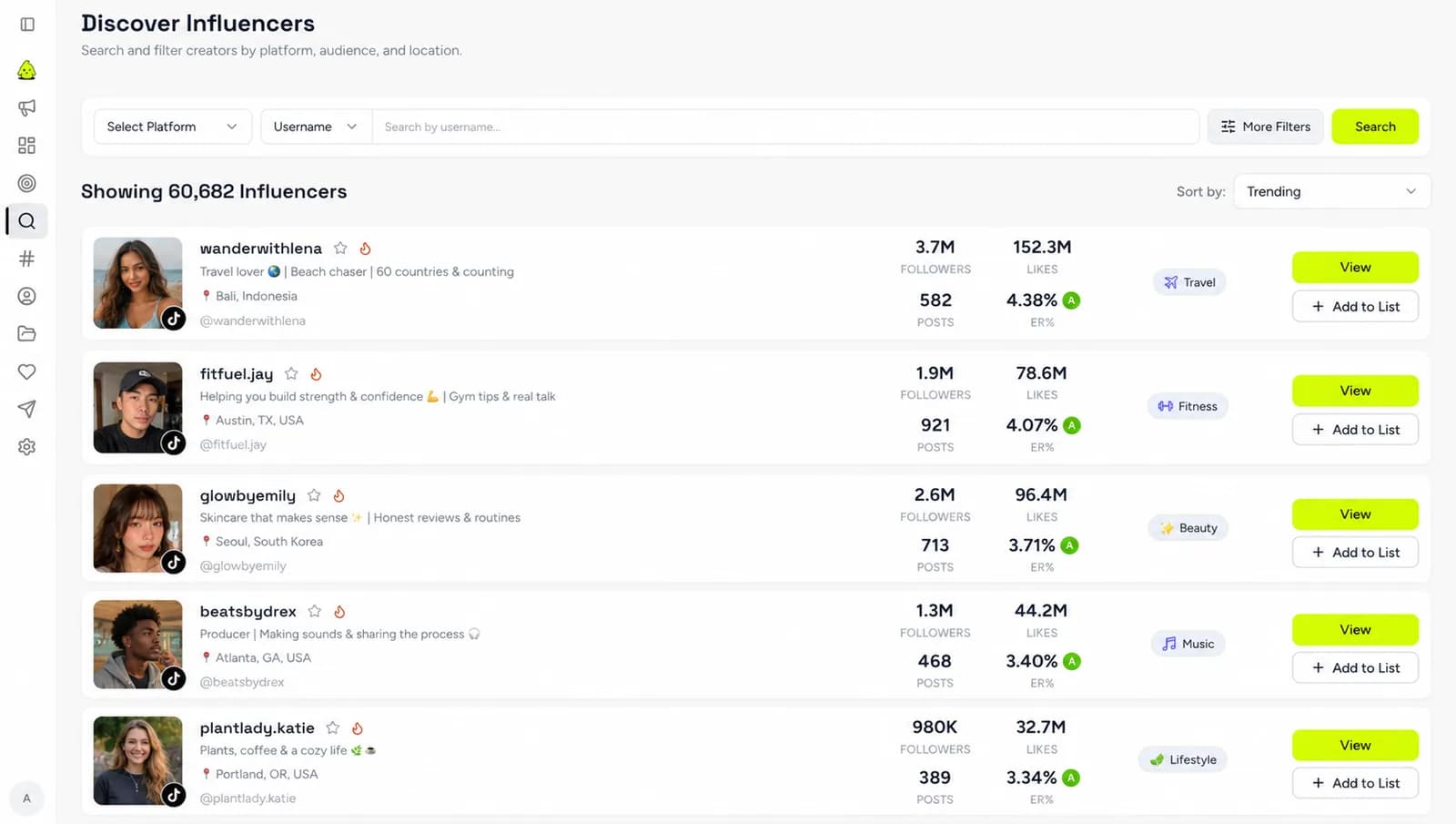
Automate Execution with the Influencer Agent: Delegate creator vetting, campaign tracking, and deliverable verification directly to the Influencer Agent. The agent manages creator shortlists, filters profile engagement rates, and monitors campaign progress in real time, saving your account directors dozens of administrative hours every week.
Managing agency expenses efficiently isn't about buying the most expensive software or stacking five different single-purpose apps. It requires selecting a platform calibrated to your agency headcount, geographic footprint, and client billing structure. By eliminating per-seat pricing traps and setting up clear client rebilling workflows, you protect your hard-earned margins.
When you pair clean financial operations with automated campaign execution, your agency scales effortlessly without ballooning overhead costs. Ready to see where your brand operations stand today?
Frequently Asked Questions
How do agencies mark up out-of-pocket expenses for client rebilling?
Agencies track out-of-pocket costs by tagging receipt line items to a specific client profile inside their accounting software like QuickBooks or Xero. During the invoicing cycle, an agreed markup percentage (typically 10% to 20%) is applied directly to the expense line items before sending the final bill to the client.
Why are per-seat pricing models dangerous for growing agencies?
Per-seat pricing models charge a fixed monthly rate per registered employee. As an agency hires contractors, account managers, and interns, software costs compound rapidly, shrinking gross profit margins even if the software usage level remains unchanged.
What expense management tools work best for agencies outside the US?
Agencies operating outside the United States should evaluate Pleo (UK and Europe), Payhawk (Global multi-currency), or Wise for Business. These platforms support local banking rails, automatic VAT calculations, and native multi-currency sync without incurring excessive foreign exchange fees.
How does virtual card creation help media-buying agencies?
Virtual cards allow media-buying agencies to issue dedicated credit cards with custom spending limits for every client account or ad channel (Google Ads, Meta Ads, TikTok Ads). This prevents client budget overruns, eliminates cross-contamination of ad spend, and isolates billing issues if a card is flagged or compromised.