The Hidden Fragility of the Modern Franken-Stack
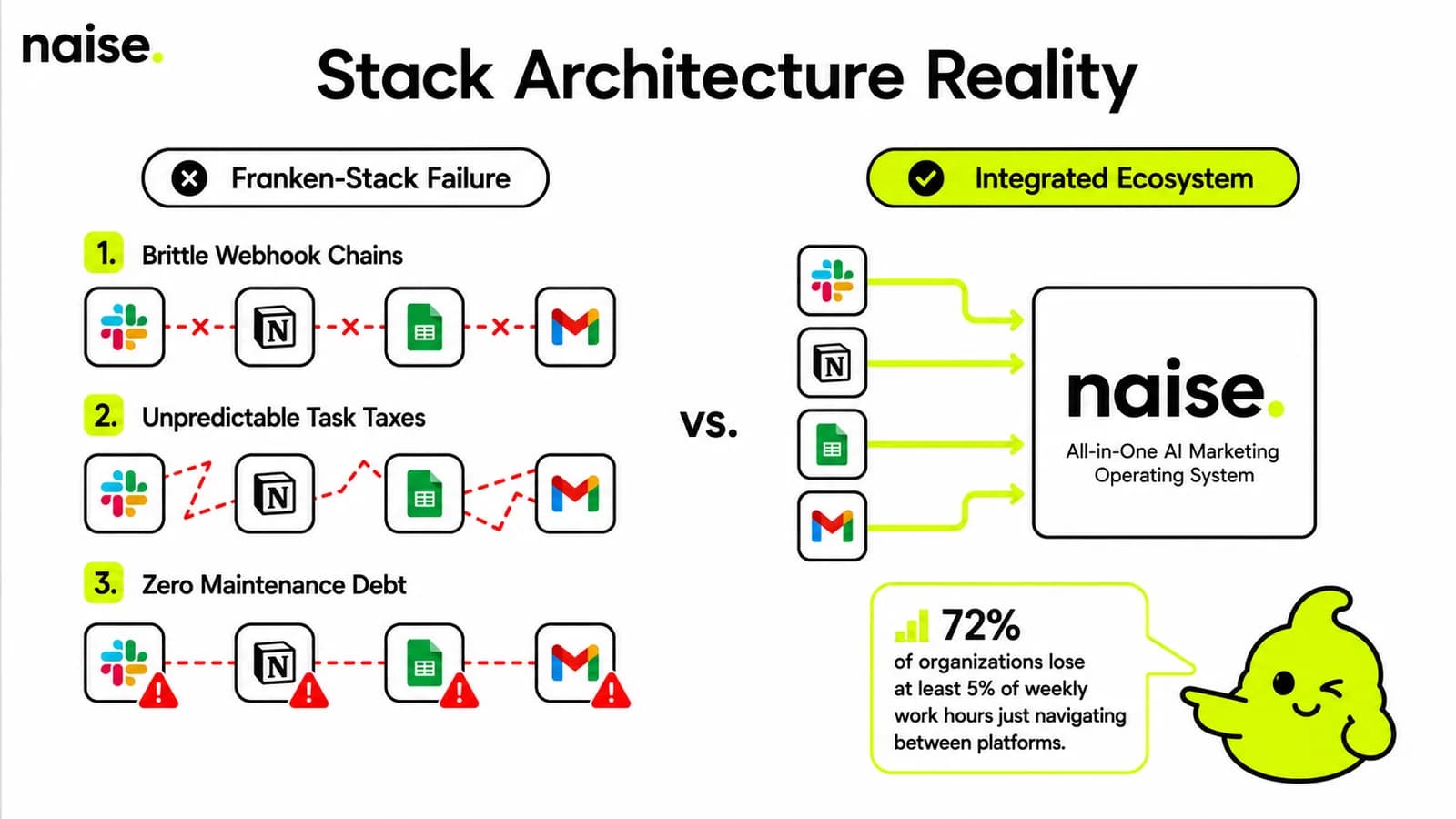
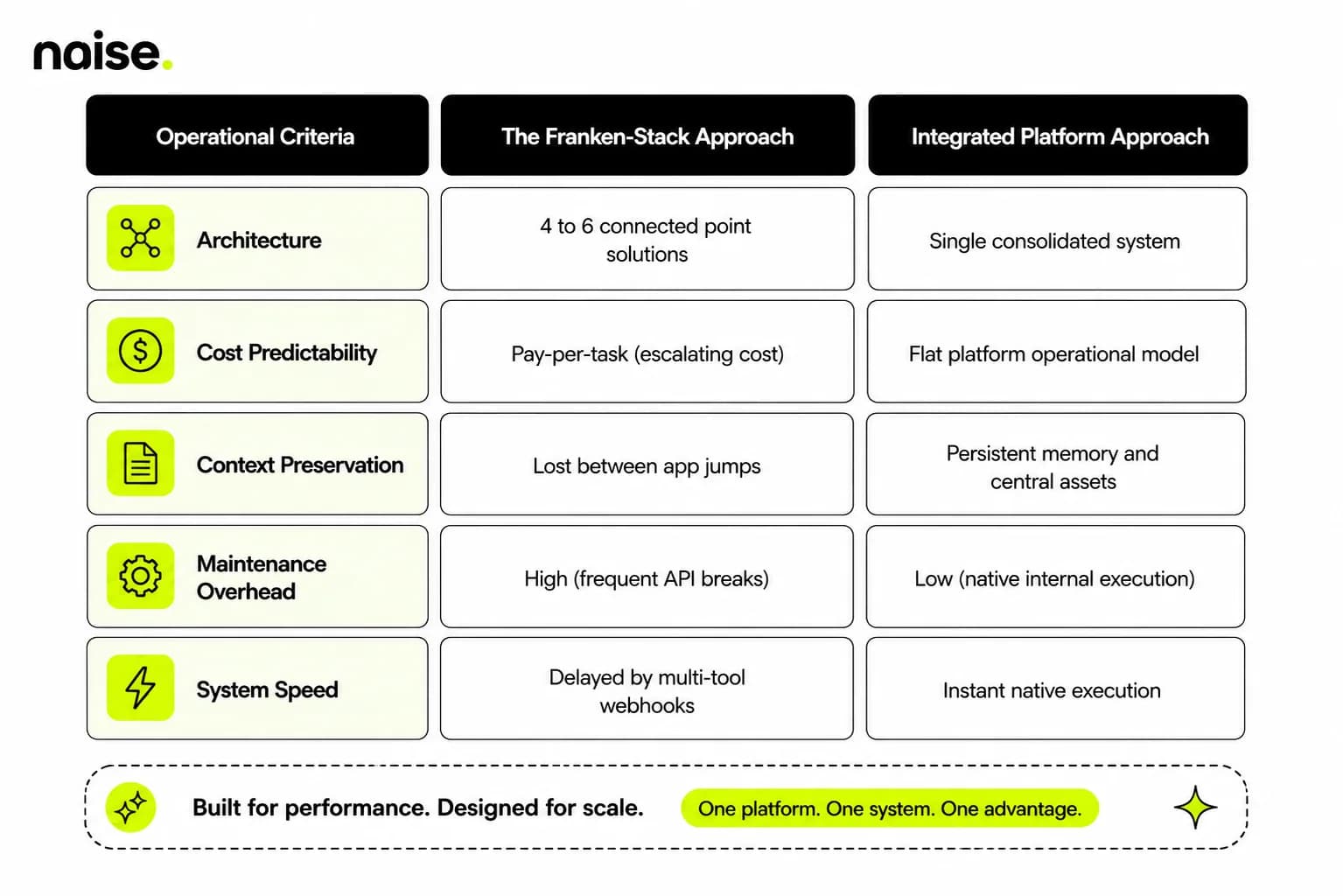
Standard operational automation breaks down because point solutions rely on brittle webhooks that halt entire workflows whenever third-party software data schemas or authentication tokens change.
Most tech roundups tell you to buy five different single-purpose apps and string them together. You connect HubSpot for pipeline data, ClickUp or Asana for task management, and Zapier or Make to push data back and forth.
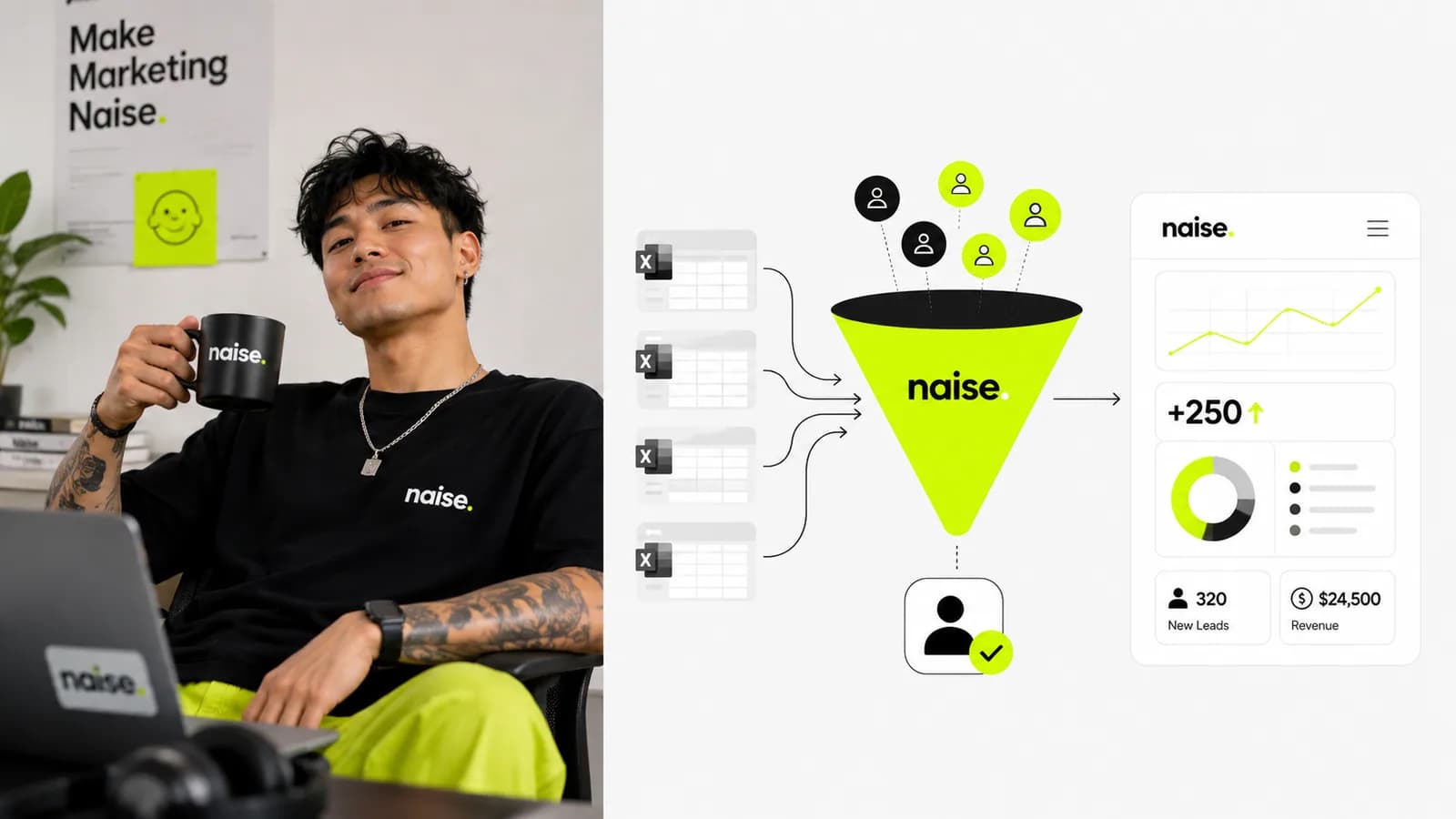
This creates a fragile setup known as the Franken-Stack. Everything functions until a single custom field changes in your CRM, silently killing four downstream triggers. Instead of focusing on revenue, your team spends Friday afternoons digging through failed webhook logs and re-entering missing data.
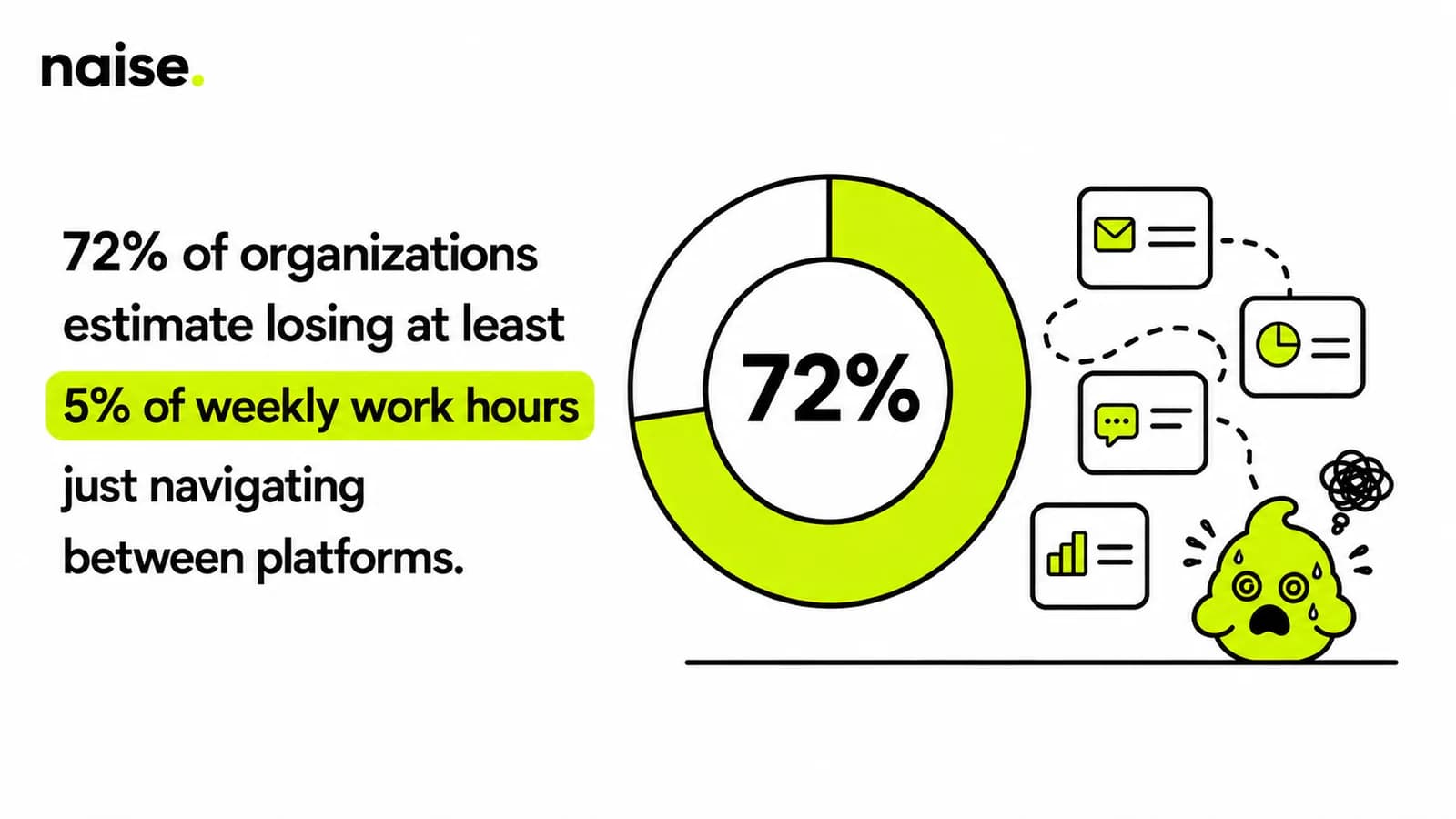
True operational stability requires reducing external points of failure. Your primary software should execute tasks natively rather than passing raw text across six disconnected browser windows.
The Scaling Trap: Execution-Based Task Taxes
Execution-based pricing models charge per operational trigger, causing software expenses to scale unpredictably alongside company growth.
When evaluating workflow automation, pricing architecture matters just as much as functional features. Popular middleware platforms charge your account based on operational runs or individual task triggers.
If your growth team launches a high-volume social campaign, a single multi-step workflow can trigger tens of thousands of tasks in a single afternoon. Your monthly automation invoice jumps from fifty dollars to eight hundred dollars without warning.
Task Tax Friction: Teams start artificially throttling their operational volume just to stay inside a lower billing tier.
Unpredictable Overhead: Finance leaders cannot forecast monthly operational expenses when software costs swing wildly.
API Rate Limits: Hard quota caps on external API Rate Limits cause execution delays during high-traffic product launches.
Your core execution stack must empower higher volume rather than taxing every automated movement.
Departmental Reality: Operations Is Not a Monolith
Operational software must match departmental nuances because generic workflow triggers cannot manage specialized context, creative alignment, or compliance rules.
Generic software buyers guide treat software for automating repetitive operational work as if every department operates identically. A finance team demands strict ledger reconciliation, while marketing operations require contextual voice alignment and multi-channel asset creation.
Using generic automation tools for specialized departmental work forces staff into endless manual editing. Generic AI writing scripts output flat copy that ignores brand guidelines, requiring human managers to clean up every post.
The Silent Cost of Automation Maintenance Debt
Maintenance Debt represents the unbudgeted technical hours staff spend auditing, fixing, and re-running failed automations across disconnected software tools.
Building an automated workflow takes only ten percent of the total effort. The remaining ninety percent goes toward maintaining pipeline health over time.
When your workflows rely on external webhooks, you inherit multi-point vulnerability. If Slack refreshes an access token or Notion updates a database layout, your entire routine stops.
Silent Failures: Webhook failures rarely send urgent alerts, leading to dropped sales leads or skipped publishing dates.
Context Loss: Information gets stripped or reformatted each time data hops across separate applications.
Prompt Fatigue: Team members spend more time drafting massive prompt instructions for isolated AI windows than shipping finished campaigns.
Regional Tech Stacks: Beyond Western Assumptions
Global operational workflows must natively integrate regional communication platforms like WhatsApp and localized payment gateways rather than relying strictly on Western email tools.
Standard software reviews focus almost entirely on North American workflows. In rapid-growth markets across Southeast Asia and Latin America, operational communication happens on WhatsApp and Telegram, not email or Slack.
If your operational tools cannot interface with local messaging channels and regional payment systems, your team falls back on manual mobile messaging. Sustainable operational software must adapt to regional realities natively.
Replacing Stack Fatigue with Naise AI
Naise AI streamlines team operations by combining context storage, agency-grade playbooks, and autonomous operators into one unified marketing ecosystem.
If manual operational tasks are draining your team's output, it is time to drop the broken webhook chain. Naise AI serves as your intelligent digital teammate, eliminating tool fatigue and prompt loops entirely.
Instead of setting up fragile webhooks across four separate tools, you manage your operations directly inside Naise AI. Here is how simple your marketing operations become:
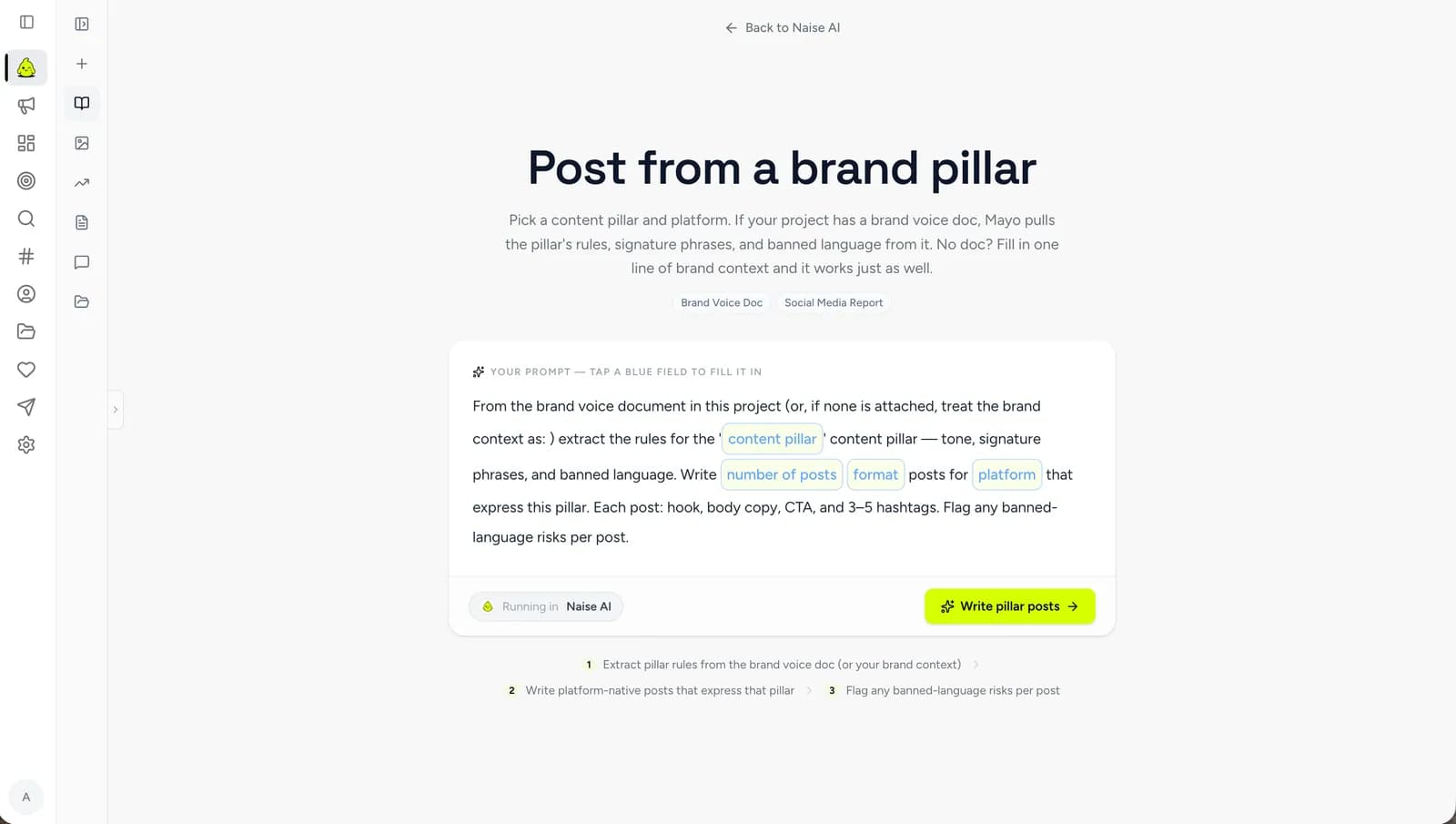
Store Context in Projects: Upload your brand guidelines, product briefs, and PDF files into Projects once. This creates persistent memory so your AI retains your distinct brand voice for every task.
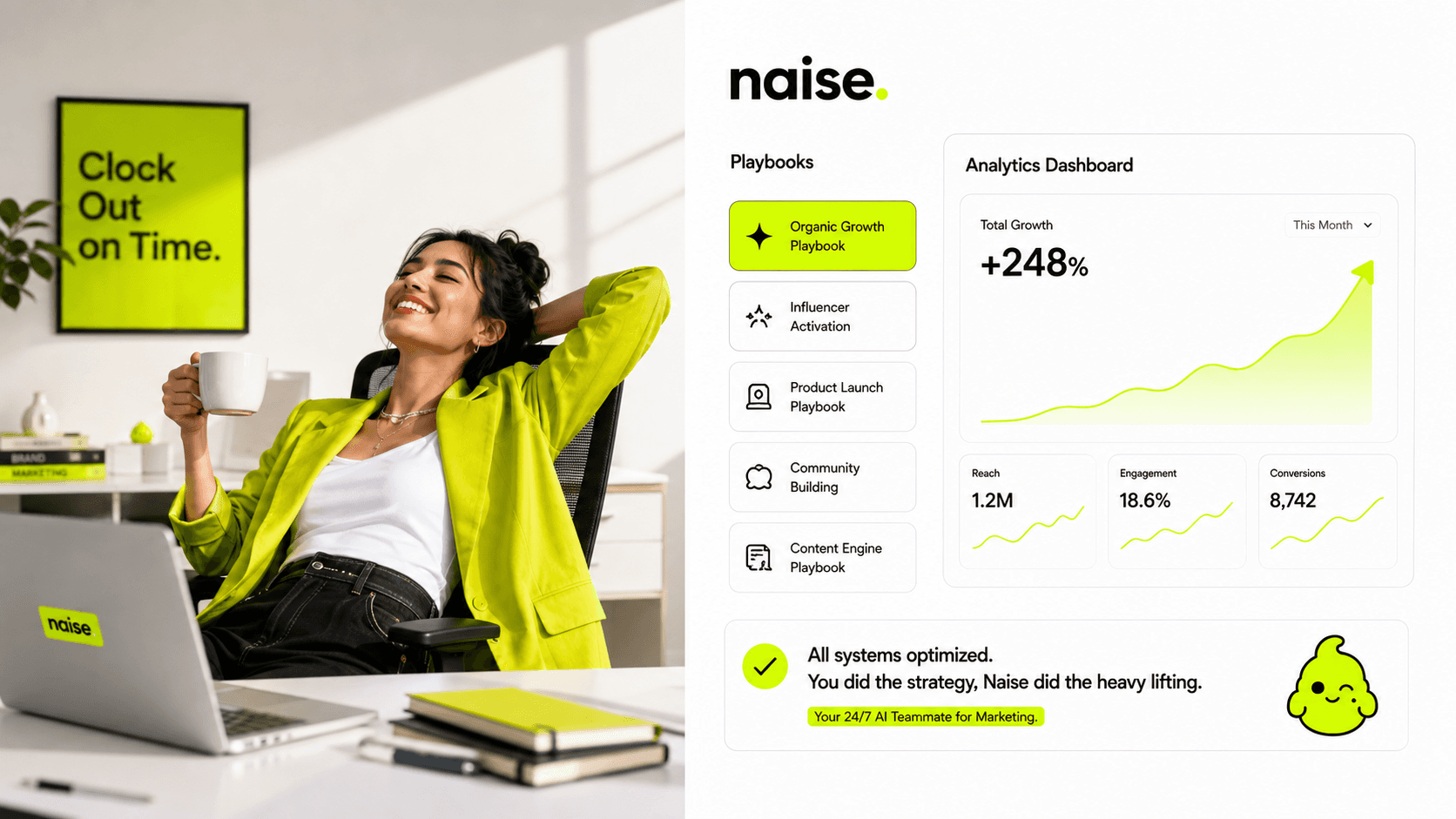
Access Central Command: Open Naise Chat inside The Dashboard to organize campaign goals, review channel strategy, and issue directives in standard language.
Select Playbooks: Eliminate blank page syndrome by choosing pre-configured Playbooks crafted for proven marketing frameworks.
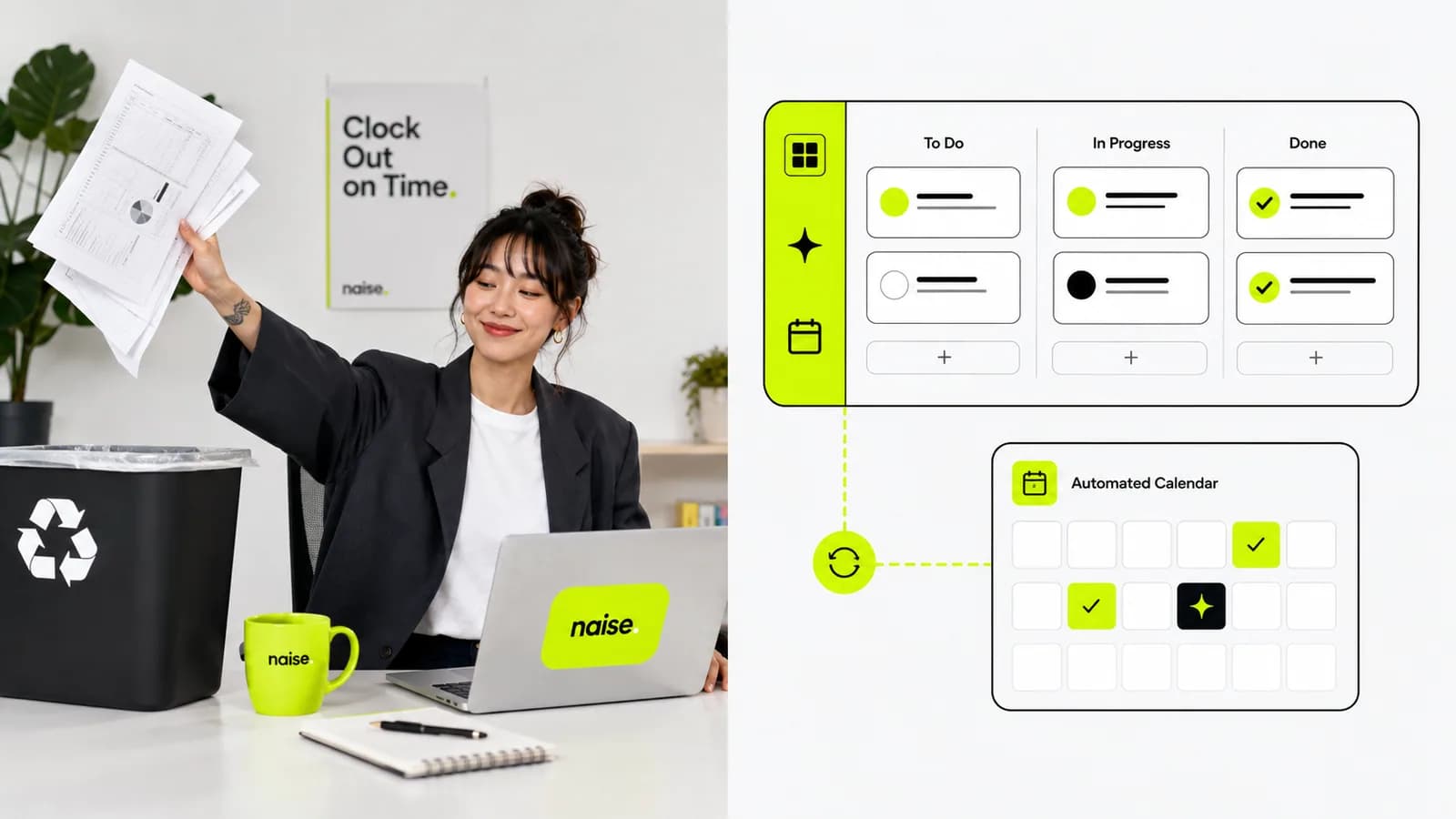
Deploy the SMM Agent: Hand off execution to the SMM Agent. The SMM Agent locks in your brand identity rules, generates matching visual assets, and schedules posts across Instagram, TikTok, and Facebook automatically.
Finding effective software for automating repetitive operational work is not about buying more subscriptions. It comes down to choosing consolidated systems that protect brand context, lower maintenance debt, and scale execution without unexpected costs.
By consolidating your brand knowledge and channel tasks into Naise AI, your team stops playing tech support for broken app chains and gets back to growing the business.
Ready to eliminate manual busywork and clock out on time? Run an instant check on your digital presence right now.
Frequently Asked Questions (FAQs)
What makes an integrated platform better than Zapier for marketing operations?
An integrated system like Naise AI maintains persistent brand context inside Projects. While middleware tools like Zapier simply pass raw text between separate third-party apps, Naise AI combines context storage, campaign strategy via Playbooks, and direct platform publishing through the SMM Agent inside a single workspace.
How does automation maintenance debt impact daily team productivity?
Maintenance Debt occurs when staff must regularly monitor, debug, and repair fragile app integrations. Whenever a software provider updates an API schema or authentication requirement, connected webhooks break. This forces team members to pause strategic work to fix error logs and manually re-enter missing operational data.
Why do execution-based task pricing models penalize scaling businesses?
Execution-based pricing models charge companies every time an automated trigger runs. As operational volume increases, high-frequency workflows run thousands of tasks per week, causing software bills to spike unpredictably. This forces teams to artificially throttle their output to avoid triggering higher pricing tiers.
Can AI software handle brand-aligned social media publishing autonomously?
Yes, specialized agents like the SMM Agent inside Naise AI handle end-to-end publishing natively. The SMM Agent locks in tone guidelines, emoji usage policies, and banned phrase lists. It creates brand-aligned visual assets and posts directly to connected accounts on Instagram, TikTok, and Facebook without requiring constant manual copy-pasting.